Print
Return to Showcase
Visit website

Secondary

Army Public School DHAI II

This content was written by
Army Public School DHAI II
Context
It is Located in Defense Housing Authority, Phase II, Islamabad, Pakistan. Army Public School & College DHAI Phase II, Boys, is a secondary and higher secondary institution catering to students aged 10–17 years (Grades VI–XII). The curriculum includes the Oxford International Curriculum (Grades VI–VIII) and the National Curriculum of Pakistan (Grades IX–XII). The school has a strong emphasis on innovation, inclusivity, and skill development, having received the International School Award from the British Council. Along the Skills Builder programme, the school had begun integrating core skills through teacher training by the British Council, Microsoft Teams certification, and University of Sunderland UK programs. These initiatives laid the foundation for a structured approach to skill development, further expanded through the Skills Builder Accelerator Programme.
Overall impact
The implementation of the Skills Builder approach has been transformational. Students demonstrated visible improvements in confidence, teamwork, and communication, contributing to higher engagement in both academic and co-curricular activities. Educators reported enhanced collaboration and a deeper understanding of integrating essential skills into daily teaching. The programme has reshaped the school's educational culture, placing skill development at the core of planning and instruction. Assemblies, classroom practices, and co-curricular events now consistently reflect essential skills. A new culture of reflective teaching and peer mentorship among educators has emerged, supported by tools like Teacher’s research work,evaluation sheets and planners aligned with the Skills Builder Framework. The school has made skill development a strategic priority going forward.
Keep it simple
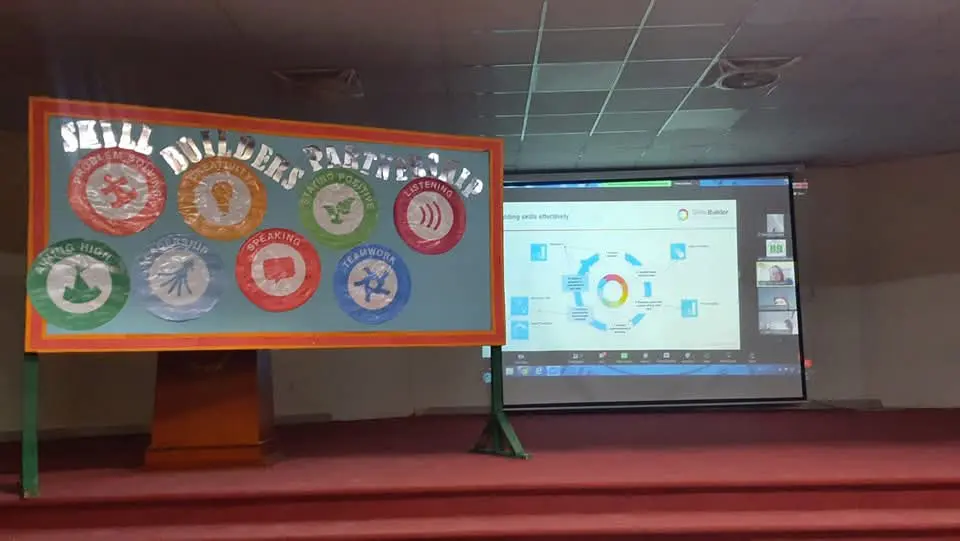
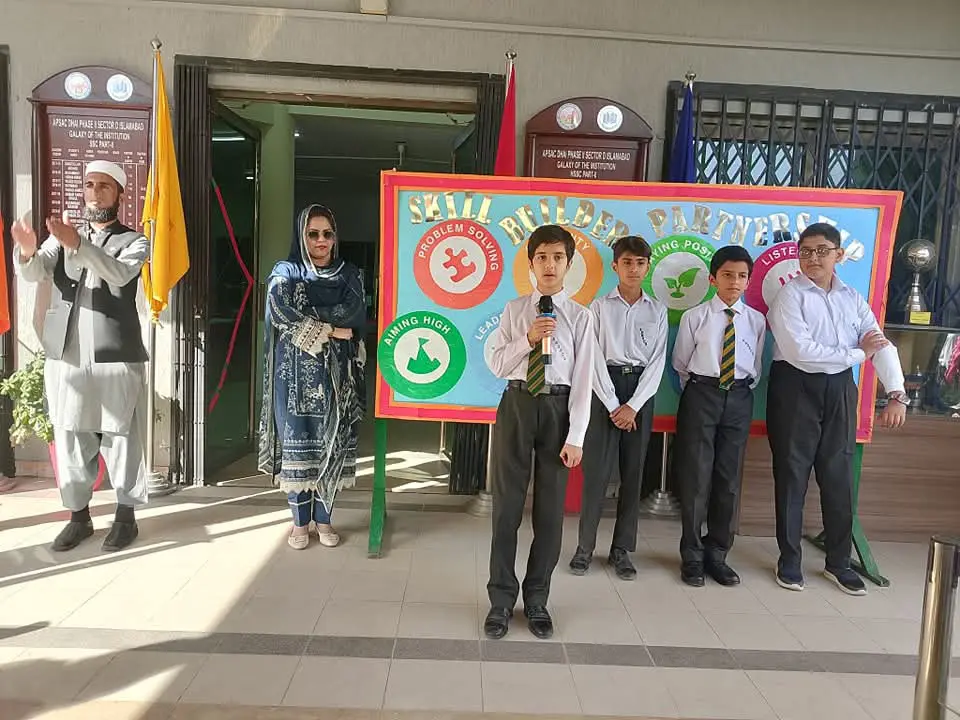
We integrate essential skills into our school culture through consistent visual cues, practical tools, and whole-school engagement. Posters and charts detailing essential skills are displayed in classrooms, corridors, and shared spaces. Assemblies, newsletters, and social media actively highlight one skill each month. Teachers’ planners and coordination sheets specifically align subject content with targeted skill development. We maintain student evaluation sheets to track progress in Listening, Speaking, Problem Solving, and Creativity, among others. We have institutionalized skill-focused workshops for parents and regularly collaborate with peer schools to share best practices. Students participate in community initiatives like civic awareness campaigns, plantation drives, and emergency drills that naturally develop Leadership, Aiming High, and Staying Positive. Teachers benefit from continual professional development on inclusive practices, Bloom’s Taxonomy, and classroom planning, enabling consistent application of essential skills in every subject. Recognitions such as Women’s Day events and value education sessions reinforce real-world relevance and practical application, making the skills framework accessible and meaningful to all stakeholders.
Start early, keep going
Skill-building begins at the primary level and is reinforced throughout a student’s journey at APS DHAI I. From early years, activities such as poster-making for national days, reading competitions, and peer-led assemblies help students build foundational communication and teamwork skills. As they progress, the skills are embedded into diverse experiences like the Spring Fiesta (entrepreneurship fair), science exhibitions, and drama festivals & multiple forums for National and International platforms. In upper grades, students engage in projects like e-voting simulations and digital design through platforms like Canva and Capcut, developing Problem Solving, Creativity, and Digital Literacy. Our lesson planners are differentiated and include extension activities and remedial plans to meet individual student needs. Our learners take part in year-round activities, from debates on Kashmir Solidarity Day to robotics in the Mobile Science Lab, ensuring continuity and progression in skill development. Parents are engaged via targeted skill-building meetings, fostering a shared language of learning. In addition, students receive Media Mind certification and participate in election campaigns and mock parliaments, reinforcing Listening, Speaking, and Leadership skills. This continuity ensures that students build mastery through repetition, reflection, and new challenges over time.
Measure it
Skill development at our institution is tracked through a robust monitoring and assessment system. We use 360° evaluation tools, including student self-assessment, peer feedback, and teacher observations to capture holistic development. Our assessment templates include rubrics aligned to the Skills Builder framework to track growth in Listening, Speaking, Teamwork, Creativity, and more. Each student maintains a digital and physical portfolio documenting evidence of essential skills development, from subject-based tasks to co-curricular achievements. Parents participate in structured feedback loops during PTMs and receive individualized reports on skill progress using our 360° evaluation forms. Teachers undergo regular self-assessment and contribute to research on skill development practices. Portfolios include practical assessments, such as robotics challenges, public speaking events, and interdisciplinary projects. We also use skill-specific worksheets and growth maps to plan targeted interventions. The impact is clearly visible in our alumni success and student achievements in national and international competitions. This evidence-based approach ensures that skills development is not anecdotal but measurable, intentional, and transparent for all stakeholders.
Focus tightly
Skill-building is woven deeply into our lesson planning and delivery. Micro lesson plans highlight specific essential skills to be reinforced, such as Problem Solving in Math or Teamwork in group science experiments. Teachers use subject-integrated skill planning, like linking Creativity to English narrative writing or Speaking to social studies presentations. All activities, including lab work, classroom rules based on Islamic values (Surah Hujurat), and thematic weeks, focus on aligning curriculum content with essential skill development. The use of the Mobile Science Lab offers hands-on, inquiry-based learning that enhances critical thinking and practical application. Subject-specific samples, such as coding in Computer Science or project-based learning in Biology — are documented to ensure cross-disciplinary alignment. Coordination meetings ensure that every subject contributes to the broader vision of skills mastery. We maintain a clear framework where teachers and students understand what skills are being built, how they’re being taught, and how mastery is assessed, making our focus precise and actionable.
Keep practising
Students are provided abundant opportunities to practice essential skills across academic and co-curricular settings. Our clubs, Robotics, MUN, Culinary, and Media, offer real-world scenarios to apply skills such as Leadership, Speaking, Problem Solving, and Creativity. The Student Council election process develops responsibility, Listening, and Aiming High through reflection sheets and campaign activities. Competitions such as elocution contests, Earth Day creative writing, and the IT Innovista Summer Camp offer repeated skill applications. Students regularly present in Book Fairs, dramatize narratives, and participate in interschool sports, reinforcing Teamwork and Staying Positive. We incorporate reflective tools like “What skill did you use today?” to embed metacognitive awareness. Weekly value education sessions linked to current affairs promote ethical reasoning and emotional resilience. Students practice First Aid drills, run environmental campaigns, and participate in international workshops to build global competencies. This consistent exposure allows skills to evolve from isolated practice to ingrained habits, transforming our students into confident, capable learners.
Bring it to life
We celebrate and spotlight essential skills in real-world contexts. Students win national and international awards that validate their Speaking, Teamwork, and Problem Solving skills, from Model UNs to robotics expos and entrepreneurship awards. Our World Space Week team won first prizes in Aeromodelling and Astropreneurship, directly linking Creativity, Aiming High, and Leadership. Our learners have developed AI-based career guidance tools and represented Pakistan in international chess tournaments. We also integrate skills into social impact, such as winning WHO-sponsored competitions on World Water Day and leaders publishing inclusion stories globally. Teachers amplify skills through professional development and have published research on skill-based instruction. Community partnerships with universities like NUST and Shifa further contextualize learning. These lived experiences demonstrate how students transfer their skills from classroom to world stage — as innovators, communicators, and citizens. Our strategic vision includes digital portfolios, skill passports, and student-led mentoring, ensuring sustainability and scalability of this transformation
What's next
The vision for scaling includes integrating essential skills initiatives using language and steps from Universal Framework2.0 into parent engagement strategies and establishing student-led skill mentorship programs at the highest levels. These efforts aim to create a more connected and empowered learning ecosystem. Future plans also involve the development of "skill passports" and a digital portfolio system to document and showcase student learning and growth. Additionally, expanding inter school collaboration will help foster shared learning and innovation across different education communities. We are excited to join the Accelerator+ Programme and look forward to continuing our essential skills journey in collaboration with Skills Builder Partnership.
Pakistan