By clicking “Accept”, you agree to the storing of cookies on your device to enhance site navigation, analyse site usage, and assist in our marketing efforts. View our Privacy Policy for more information.
Global Impact Report 2025
An image of the Global Impact Report 2025 displaying the front cover and pages arranged in a fan shape.

One day, everyone will build the essential skills to thrive

Across the world, 1,113 Skills Builder partners delivered more than 2,462,000 high quality opportunities for individuals in 52 countries to build essential skills in the past year.

Our reach
Skills Builder impact
Countries spotlight
Thanks to Founding Partners

Our reach in 2024-25

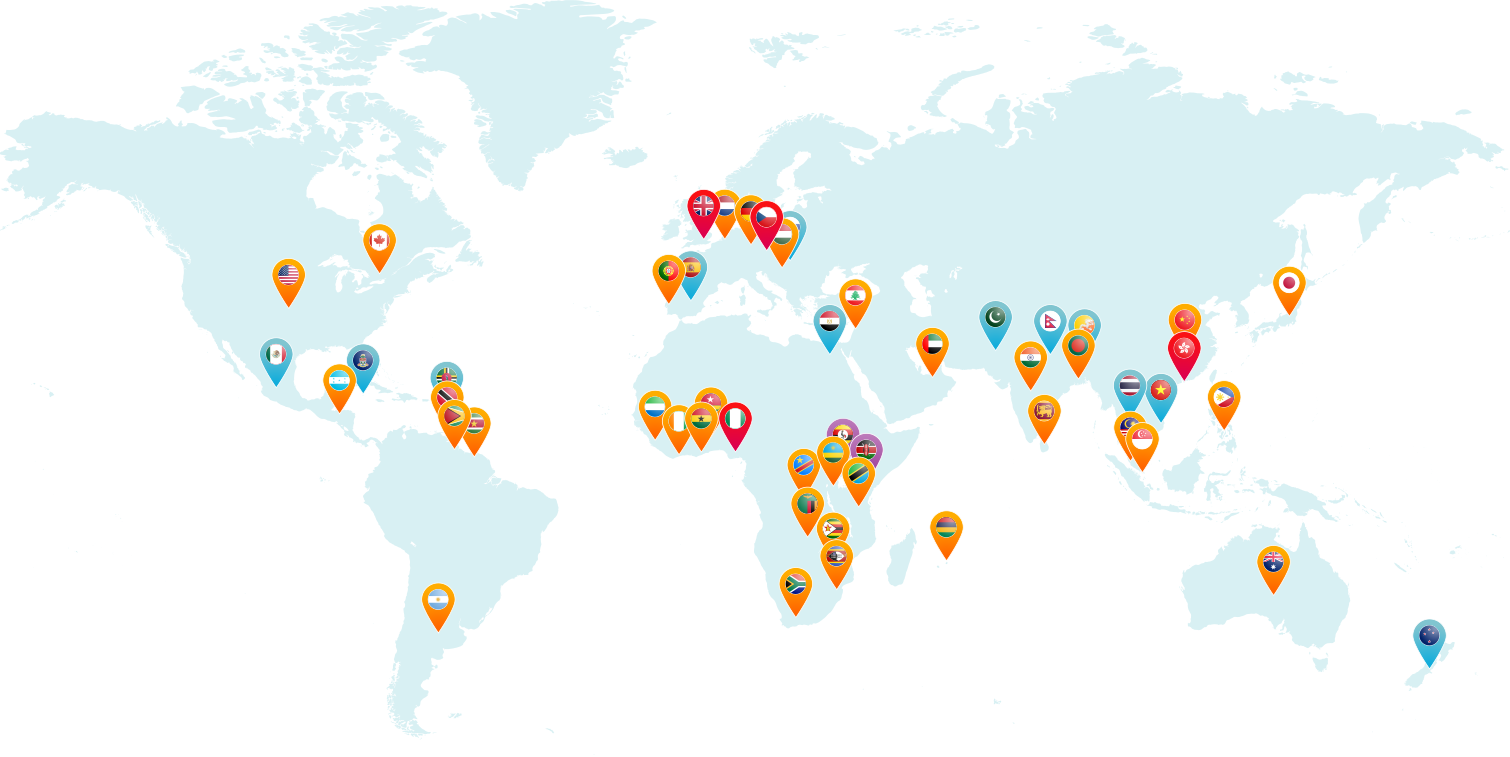
A map displaying all the countries accessed by skills builder programmes. 

The full list is as follows:

Schools only (Blue pins)
Bhutan
Cayman Islands
Dominica
Egypt
Mexico
Nepal
New Zealand
Pakistan
Slovakia
Spain
Thailand
Vietnam

NGOs (orange pins)
Argentina
Australia
Bangladesh
Canada
China
Cote d'Ivoire
Democratic Republic of the Congo
Eswatini
Germany
Ghana
Guyana
Honduras
Hungary
India
Japan
Lebanon
Malaysia
Mauritius
Netherlands
Philippines
Portugal
Rwanda
Sierra Leone
Singapore
South Africa
Sri Lanka
Suriname
Tanzania
Togo
Trinidad & Tobago
UAE
USA
Zambia
Zimbabwe

Lead Partners (red pins)
UK
Czechia
Nigeria
Hong Kong (China)

Policy (purple pins)
Uganda
Kenya

Skills Builder in schools

Directly delivering essential skills programmes to 907 schools in 25 countries for direct impact and to test and hone the model for local conditions.

Skills Builder through NGOs

Enabling NGOs and local providers to use the Skills Builder model with 330 approved international programmes now available in 42 countries.

Skills Builder through Lead Partners

Working with local NGOs to lead the Skills Builder approach in their countries - currently in the UK, Czechia, Nigeria and in Hong Kong (China)

Skills Builder through education systems

Supporting adoption of the Skills Builder model in teaching, curriculum and assessment so every learner benefits –currently in UK, Kenya and Uganda

Across the world in 2024-25:

Number of individuals reached:

2,462,000

Number of education institutions demonstrating excellent practice:

907

Number of countries with Skills Builder partners:

52

Number of educators trained and supported:

22,729

Number of Skills Builder approved programmes:

330

Skills Builder impact

There is good evidence that effective implementation of the Universal Framework in school and college settings can accelerate learners’ progress in essential skills.

How we measure impact

We use educator assessments of learner progress as our primary means of understanding the impact of the Accelerator programme over the course of the year.

Educators complete these assessments through Skills Builder Hub, identifying the extent to which learners in their classes are able to demonstrate each step of the essential skills. This gives an overall skill score (0-16) which can be tracked over time.

How programmes accelerate impact

This year, we were able to demonstrate that learners made accelerated progress in their essential skills, as measured by educators, compared to individuals who had not taken part in a Skills Builder programme:

A horizontal bar chart comparing the outcomes for three different groups of schools. "Schools without a Skills Builder programme" have the lowest score at 0.40. "Schools using Skills Builder Hub" have a significantly higher score of 1.51. "Schools on the Accelerator programme" have the highest score at 1.64.

We have been tracking out impact in this way since 2020, and have seen notable consistency in the levels of progress that are made by learners who are not in Skills Builder programmes over that time. It has been good to see continued progress year-on-year in the additional progress made through Skills Builder programmes as a result of refining our training and learning resources.

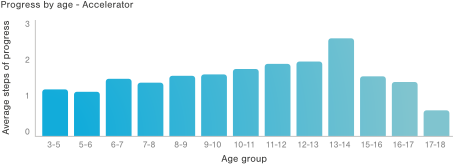
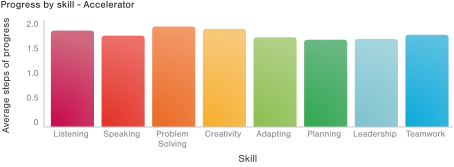
We have been able to demonstrate accelerated progress across all year groups and each of the eight skills.

A bar chart titled "Progress by age - Accelerator" plotting "Average steps of progress" against different "Age groups". The chart shows that progress generally increases with age, starting at just over 1 for the 3-5 age group, peaking at approximately 2.6 for the 13-14 age group, and then declining for the older age groups.A bar chart titled "Progress by skill - Accelerator," showing the "Average steps of progress" for eight different skills. All skills demonstrate high average progress, with values clustered between approximately 1.7 and 2.0. "Problem Solving" and "Creativity" show the highest progress, while "Planning" and "Leadership" show slightly lower, though still high, progress.

Countries spotlight

Explore what's going on in some of the countries where we have partners

The Union Jack flag of the United Kingdom of Great Britain and Ireland
United Kingdom
The Union Jack flag of the United Kingdom of Great Britain and Ireland
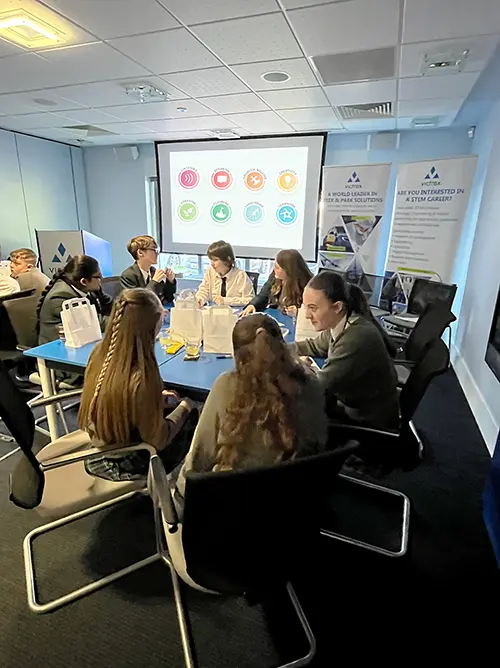
A group of teenage schoolchildren sat at a desk taking part in a Skills Builder activity facilitated by an employer.
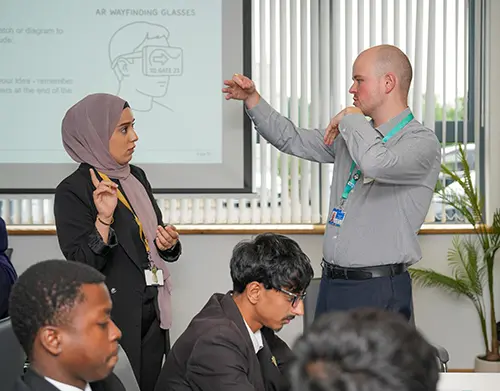
Two colleagues deliberate with each other whilst taking part in a Skills Building exercise in their workplace.
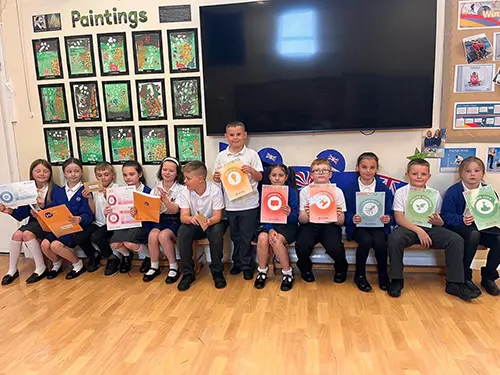
A group of primary school pupils sat in a line smile with glee as they hold up posters of the skills icons.

2,462,000

Learners reached

18,470

Educators trained

804

Institutions with Skills Builder Awards

243

Skills Builder

approved programmes

Building essential skills is an urgent national priority in the UK, driven by the acceleration of technological change and the pervasive “skills trap.”

UK research shows that essential skills are critical for confident and effective use of new tools like AI, with workers high in these skills being 30% more likely to be frequent AI users. Fundamentally, addressing the persistent gap in essential skills could unlock a potential value of £22.2 billion per year for the UK economy, making our mission central to national prosperity and social mobility.

The past year, 2024-25, saw the Skills Builder Partnership in the UK achieve transformative scale. The collective of 898 UK partners - across education, employers, and impact organisations - delivered more than 2,370,000 high quality opportunities to build essential skills.

This success was deepened by important policy milestones with the Framework now included in new statutory guidance for Careers Education in England.

The change in schools supported has been profound. Learners on the Accelerator programme made an average of 1.64 steps of progress in their essential skills, demonstrating measurable growth across all age groups and all eight skills. This progress is particularly vital for those facing the greatest disadvantage. The impact is perhaps best captured by our partners, such as this quote from a Careers Leader at Brewood School, who noted: “Skills Builder has played an important role in supporting our learners with SEND... This clear framework has helped students build confidence, improve communication, and develop teamwork at a pace that meets their needs, preparing them for future learning and independence.”

Looking ahead, we are focused on accelerating the momentum captured by this report. Our plans include further embedding the Universal Framework 2.0 to ensure its continued relevance in the age of AI, and deepening our work with employers to use essential skills for talent attraction and retention.

Crucially, we will expand our place-based approaches and pilot new work in the criminal justice sector, ensuring that everyone, everywhere in the UK, has the chance to build the essential skills to succeed.

Lead partner:

Skills Builder UK - since 2008

Explore case studies and programmes available in the United Kingdom here

The flag of the Czech republic
Czechia
The flag of the Czech republic
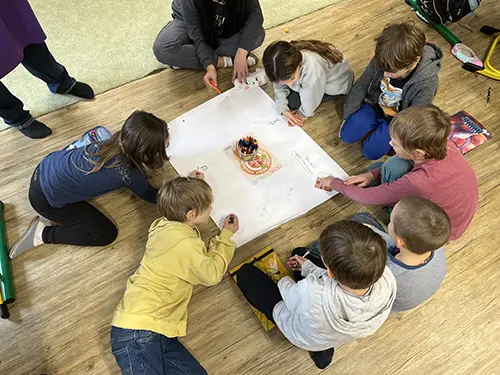
A group of children in Czechia sit on the floor and brainstorm with each other on a large sheet of paper.
An image in the Czech Republic showing skills builder staff meeting with staff members from Schola Empirica.
A group of Czech school children brainstorm together in the classroom.

4,479

Learners reached

335

Educators trained

21

Institutions with Skills Builder Awards

1

Skills Builder

approved programmes

Building essential skills is now a critical priority for the Czech Republic, driven by the need to respond to rapid AI and technological change.

The country’s key strategic document for education, Strategy 2030+, highlights the importance of developing essential skills. This emphasis is now being realised through curriculum reform aimed at shifting the focus from rote learning towards a skills-based education, making the implementation of the Skills Builder Universal Framework both highly relevant and timely.

The past year has marked significant growth and policy influence for Skills Builder in Czechia, led by Schola Empirica.
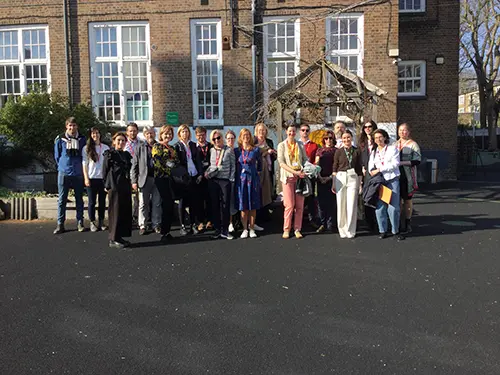
In a key achievement, we organised a crucial study visit to flagship Skills Builder schools in London for influential Czech stakeholders, including representatives from the Ministry of Education, the Czech School Inspection (ČŠI), the National Pedagogical Institute, and leading educational NGOs. This engagement was a platform to subsequently introduce the measurable Skills Builder approach directly to inspectors of the ČŠI.

In the realm of teacher development, we continued our cooperation with pedagogical faculties at leading Czech universities in Brno and Prague, and successfully introduced the framework during a workshop at the summer school for the Community of Future Teacher Educators. School engagement has also expanded rapidly.
Last school year, we supported eighteen schools in the Skills Builder Accelerator Programme, engaging 262 teachers and impacting 4,053 pupils.

To provide robust evidence for this work, we are also developing and piloting a longitudinal research design to track the development of learners’ essential skills using the Skills Builder methodology, filling a gap in national research.
The impact of the Skills Builder work has already been transformative, fundamentally shifting school cultures towards intentional skill development. Supported schools have seen a significant change, particularly in teacher self-efficacy and in the way educators approach their lessons. This also translates to how students articulate their learning and progress.

Our future strategy focuses on both deep implementation and achieving national scale and
curriculum reform.

Lead partner:

Schola Empirica - since 2018

Explore case studies and programmes available in Czechia here.

The flag of Hong Kong
Hong Kong SAR, China
The flag of Hong Kong
Two students in Hong Kong stand up and deliver a presentation together whilst reading from a crib sheet that they prepared for themselves.
A group of older students working with Ednovators pose in front of their college building
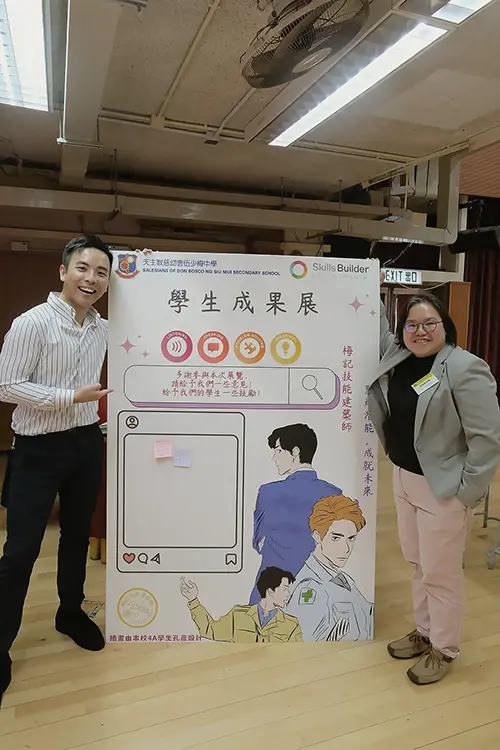
Marco Shek from Ednovators poses with a colleague in front of a poster board with the listening, speaking, problem solving and creativity icons on it.

1,236

Learners reached

174

Educators trained

3

Institutions with Skills Builder Awards

1

Skills Builder

approved programmes

In Hong Kong, building essential skills has become a strategic necessity - not simply an educational trend, but a response to deep structural shifts in our society. With the government’s recent AI education policy accelerating the push for digital literacy, computational thinking, and responsible AI use, schools are confronting an urgent question: What does it truly mean to prepare our young people for an AI‑enabled future?

The answer extends well beyond teaching students how to use tools. It demands that we cultivate adaptability, creativity, communication, resilience, and problem solving - the human capabilities that remain valuable no matter how technology evolves.

Over the past year, Ednovators has deepened the adoption of the Skills Builder Universal Framework across our school network. Educators tell us the Framework finally gives them a “grammar” for skills - helping them describe, track, and celebrate student growth that previously felt invisible. School leaders report clearer skill development pathways, more purposeful classroom dialogue, and higher levels of student engagement, especially among learners who may not excel under traditional exam‑centric measures.

We also see the beginnings of a meaningful cultural shift. As schools embed the Framework into whole‑school planning, more leaders recognise the need to broaden Hong Kong’s long‑standing definition of “success.” Increasingly, essential skills are valued alongside academic achievement - not as extras, but as essential components of a holistic, future‑ready education.

Looking forward, our priority is to grow this movement with intention and evidence. We plan to expand the number of engaged schools, strengthen our professional learning pathways for teachers, and deepen documentation of local case studies that illustrate what skills‑based transformation looks like in practice. We will continue to support school leaders in aligning essential skills with curriculum design, assessment practices, and student support structures.

Ultimately, our goal remains unchanged: to ensure every young person in Hong Kong can build the essential skills to thrive in learning, work, and life - with confidence, purpose, and agency in an ever‑changing world.

Lead partner:

Ednovators - since 2024

Explore case studies and programmes available in Hong Kong here.
The flag of Nigeria
Nigeria
The flag of Nigeria
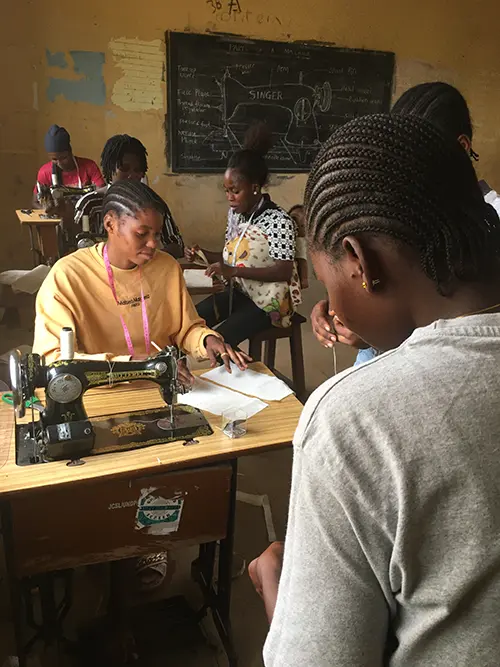
A group of women refugees in Nigeria learn essential skills whilst in a textiles class with sewing machines.
A lesson with older students in Nigeria. The tutor, dressed in a bright green traditional Nigerian dress praises her student, who is stood up and smiling in front of the class.
A group of young Nigerian school children in bright clothing watch a lesson whilst sat outdoors in the sunshine.

1,283

Learners reached

118

Educators trained

6

Institutions with Skills Builder Awards

11

Skills Builder

approved programmes

As Nigeria transitions to a modern economy, graduates’ essential skills increasingly fall short of employers’ expectations. Policymakers, educators and employers now recognise that informal acquisition is insufficient.

To close this gap, the 2025 Federal Ministry of Education’s National Policy on Skills Development mandates the teaching of essential skills at all levels of education. The major policy shift ensures young people are better prepared for workplace demands and national development.

In the past year, Concinnity has strengthened its readiness as Lead Partner for Skills Builder in Nigeria and established the groundwork for national coordination and local ownership.

We also aligned key education and government stakeholders on a shared vision for essential skills. A key achievement was Concinnity’s advisory contribution to the 2025 National Policy on Skills Development mandating the teaching of soft skills across all levels of education.  

The Universal Framework, implemented in six schools and ten impact organisations, has proven effective in Nigeria.

The Global Accelerator programme was implemented in ten schools, reaching over 300 students. The teachers report greater confidence teaching essential skills alongside academic subjects, while students show improved ability to articulate and apply these skills in practical contexts.  In recognition of their progress and commitment of the Universal Framework, five schools earned Bronze Awards and one Silver.

The Global Impact Fellowship has also equipped hundreds of learners with essential skills, enabling their application across diverse contexts. These initiatives earned multiple Impact Awards across Levels 1 to 4.

Looking ahead, we plan to scale up nationwide adoption of the Universal Framework. This year, we added ten more schools, including our first polytechnic, and expanded Skills Builder’s geographical reach into three additional states and Abuja.

Our strategy prioritises engagement with federal and state government authorities, and private school organisations to support rollout of the 2025 National Policy on Skills Development.  We will also develop regional partners to support effective nationwide implementation. To strengthen Skills Builder’s evidence-based approach, Concinnity will establish a robust system to monitor programme implementation and conduct broader research on essential skills in Nigeria.

Lead partner:

Concinnity - since 2025

Explore case studies and programmes available in Nigeria here.

The Lebanese flag
Lebanon
The Lebanese flag
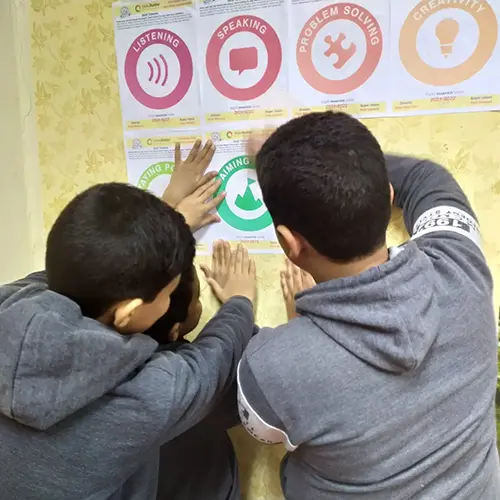
To Lebanese boys stick Skills Builder posters up onto the wall of their classroom.
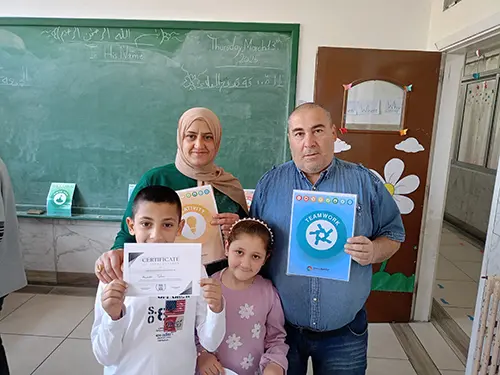
Two Lebanese school kids stand proudly in front of their mother and father, who is holding up a skills award for Leadership.
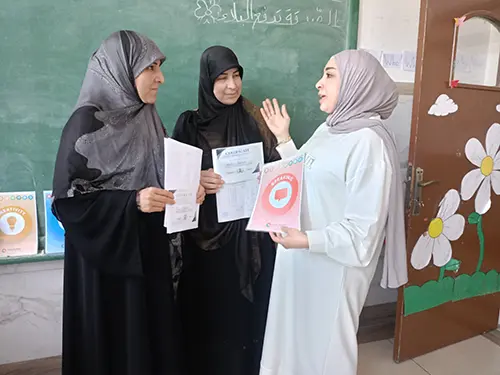
Three teachers in Lebanon stand and discuss with each other a lesson plan to incorporate speaking skills. They are wearing long dresses with grey and cream coloured hijabs.

15,903

Learners reached

1,422

Educators trained

10

Institutions with Skills Builder Awards

3

Skills Builder

approved programmes

Lebanon is experiencing a significant phase of educational transformation, making the development of essential skills a national priority. Rapid advancements in artificial intelligence, technological change, and shifting labour market demands are reshaping the competencies required of today’s learners. Workforce reports in Lebanon highlight a growing emphasis on essential skills such as communication, teamwork, problem-solving, and creativity. At the same time, the new Lebanese curriculum has, for the first time, clearly integrated essential skills - creating a real need for practical frameworks that help teachers embed these skills in measurable and meaningful ways.

Over the past year, Al-Mabarrat Association has made notable progress, both as a leading national educational institution and as the national partner for Skills Builder in Lebanon. The Association contributed through eleven representatives to the national curriculum development committees, where its accumulated experience with Skills Builder supported the teams in developing a clearer understanding of skill pathways and how these competencies can be incorporated systematically into the new curriculum.

In parallel, the implementation of Skills Builder expanded within Al-Mabarrat schools, and a new international partnership was launched between one of our schools
and a school in India.

The impact observed has been tangible. Teachers reported a deeper understanding of how skills develop progressively and began integrating them more intentionally into lesson planning. Students demonstrated increased confidence, active participation, and a stronger sense of responsibility for their learning, particularly in collaborative activities.

Looking ahead, Al-Mabarrat aims to broaden the use of Skills Builder across additional schools, strengthen collaboration with national educational institutions, and support the full Arabic translation of the program. The goal is for Skills Builder to serve as a key tool in implementing the new curriculum and preparing learners for a rapidly evolving and increasingly complex world.

Lead partner:

Al Mabarrat Foundation - since 2022

Explore case studies and programmes available in Lebanon here.

The Kenyan flag
Kenya
The Kenyan flag
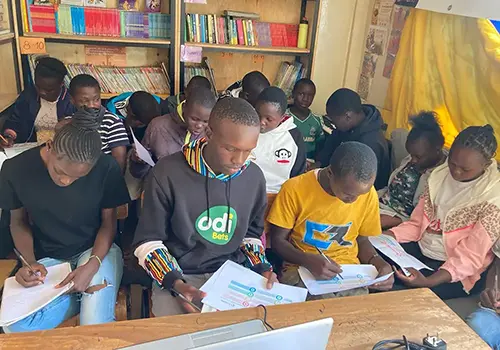
A group of older students in Kenya sit together and revise in a classroom.
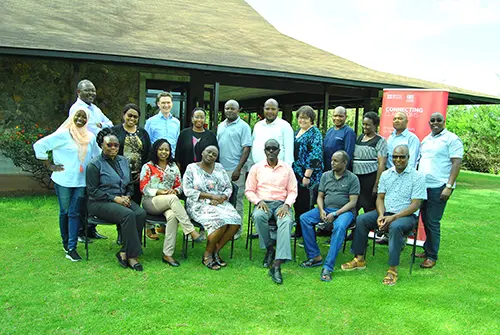
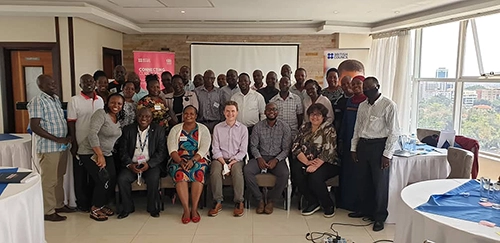
A group photo showing Tom Ravenscroft stood alongside members of the Kenyan National Examinations Council.
Two Kenyan boys in blue chequered school uniforms smile happily as they sit and study outside.

1,077

Learners reached

42

Educators trained

4

Institutions with Skills Builder Awards

3

Skills Builder

approved programmes

The collaboration between the Kenya National Examinations Council ((KNEC), British Council and Skills Builder Partnership is a strategic effort to integrate the teaching and assessment of essential skills into the core of Kenya’s education system. This work is fundamentally driven by the introduction of the Competency-Based Curriculum (CBC), which began its rollout in 2017.

The CBC was established to address the shortcomings of the previous curriculum, which was heavily focused on rote memorization and high-stakes examinations, and to instead prepare students with the practical skills needed to meet the demands of the 21st-century economy and Kenya’s Vision 2030 development blueprint.

Skills Builder Partnership, working closely with KNEC and the British Council since 2021, has provided expertise to align Kenya’s national Competency-Based Assessment Framework (CBAF) with the rigorous, measurable structure of the Skills Builder Universal Framework.

Over the past year, the resulting new models for teaching and assessing these skills have been successfully piloted with 18 primary schools across three Kenyan counties. A key output of this multi-year partnership is the creation of comprehensive, contextualized training and instructional materials for teachers, including guides for both lower and upper primary school, a trainer manual, and accompanying trainer materials.

KNEC is leveraging these resources to roll out extensive teacher training programmes across the country. The wider work of Skills Builder in Kenya includes working with schools and approved youth and entrepreneurship programmes.

Beyond the work with KNEC, Skills Builder has worked with a set of flagship schools and NGO programmes to model how the Skills Builder approach can be put into practice. This combination of government-led policy work and grassroots implementation is a powerful one, demonstrating that it is possible for children and young people across Kenya to develop the essential skills to thrive.

Lead partner:

The Kenya National Examinations Council - since 2021

Explore case studies and programmes available in Kenya here.
The flag of India
India
The flag of India
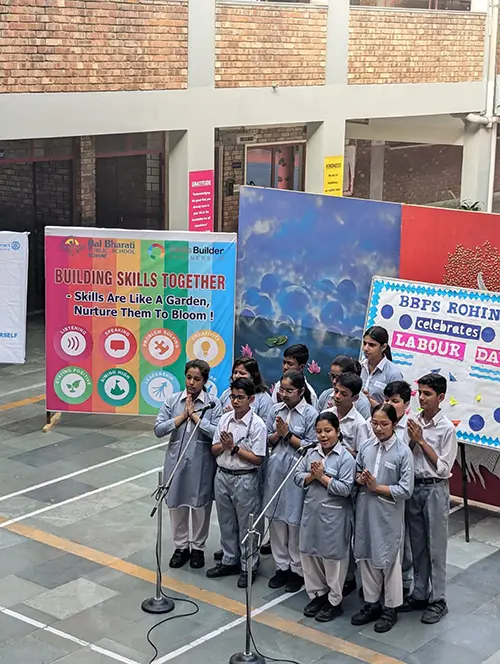
A group 12 Indian school students stand in a tight group as they deliver a presentation. Behind them is a large banner with the eight essential skills icons.
A group of teenage school students and their teachers in India at a cricket match. Some of them are wearing green and yellow cricket jerseys.
A group of young Indian schoolboys wearing school uniforms of white shirts and red shorts smile as they sit relaxing outside during their school break time.

108,106

Learners reached

1,318

Educators trained

23

Institutions with Skills Builder Awards

12

Skills Builder

approved programmes

With one of the world’s youngest populations, India must equip its massive workforce with skills that are relevant to the digital economy. The rapid advancement of AI and automation is transforming nearly 70% of job roles, increasing the demand for uniquely human, transferable skills like complex Problem Solving, Creativity, Communication, and Adaptability.

This shift is explicitly recognized by the National Education Policy (NEP) 2020, which aims to move the education system away from rote memorization toward holistic, skill-based learning and critical thinking. Employers across India consistently prioritize these essential skills, viewing them as the ‘invisible edge’ that turns academic potential into real-world employability.

The past year has seen Skills Builder Partnership expand its reach in India, demonstrating significant achievements and impact. In 2024–25, our partners delivered high-quality essential skills opportunities to 108,106 learners in the country. This far-reaching work was supported by 1,318 educators who have been trained and are embedding the Universal Framework into their practice.

A key achievement is the growth of accredited programs, with 12 Skills Builder approved programmes now available, alongside 23 institutions that have achieved Skills Builder Awards for demonstrating excellent practice.

The growth in India is rapid, and we are committed to scaling our work to meet the national demand for essential skills development. The current pace of expansion, particularly through our network of NGO partners and schools, requires a localized and dedicated leadership structure.

Our plan for the coming years is to find and establish multiple Lead Partners across different Indian states. This regional approach will be crucial for translating and adapting the Universal Framework to resonate with diverse local curricula and education structures, significantly accelerating our ability to embed the Skills Builder approach across the country and further align with the vision of the NEP 2020.

Explore case studies and programmes available in India here.

The flag of Uganda
Uganda
The flag of Uganda
A group photo of Tom Ravenscroft sat alongside members of the Uganda National Examinations Board.

A group of Ugandan college students wearing gowns and mortarboard hats stand and celebrate with their certificates on graduation day.
A group of young Ugandan school students stand in lines ready to return to lesson time, they are all wearing red tartan uniforms and are being instructed by older teenage students acting as the class monitors.

31,448

Learners reached

5

Educators trained

3

Institutions with Skills Builder Awards

6

Skills Builder

approved programmes

Building essential skills is an urgent priority in Uganda, driven by the country’s unique demographic and economic landscape. With one of the youngest and most rapidly growing populations in the world, equipping youth with transferable skills is critical to navigating a challenging job market.

Despite high primary school enrolment, low learning outcomes persist, and the economy creates few quality jobs, leading to pervasive underemployment and a skills mismatch where employers cite graduates lacking key competencies.

In 2024-25, Skills Builder partners demonstrated significant achievements and a growing impact across Uganda, driven by a two-pronged strategy of on-the-ground programme delivery and systemic policy work. Our partners successfully delivered high-quality essential skills opportunities to 31,448 learners in the country, with 6 approved programmes available for NGOs and youth organisations, and 3 institutions achieving a Skills Builder Award for excellent practice.

Qualitatively, the model is transforming practice, as demonstrated by the journey of organisations like Happy Times Junior School, which has adopted the approach to integrate essential skills into its curriculum. The school’s experience reflects the consistent impact seen globally, where implementing the Universal Framework provides educators with the clear steps and resources needed to drive measurable change in learner progress.

The most transformative achievement in Uganda is the partnership’s work to embed the Universal Framework at a national policy level. Since early 2022, Skills Builder has been working closely with the British Council and the Uganda National Examinations Board (UNEB).

This collaboration focuses on integrating the approach to support Ugandan teachers in the assessment and systematic building of essential skills within the education system. By building the Universal Framework into the national curriculum and assessment models, we believe this policy-level work can open up the benefit of rigorous, measurable essential skills development to all children and young people across Uganda in the future.

Explore case studies and programmes available in Uganda here.

Thanks to Founding Partners

As a not-for-profit organisation, we are dependent on the generosity of our funders. The launch of our global work has been enabled by support from our Founding Partners:

The LSEG Foundation logoThe UBS logoThe KPMG logoThe Salesforce logo

We are grateful to our Board who give their time and expertise generously and voluntarily:

Sir Ian Davis

Samantha Butters

Alex Shapland-Howes

Professor Bill Lucas

Susan Douglas CBE

Thank you for your support
An image of the Global Impact Report 2025 displaying the front cover and pages arranged in a fan shape.