This content was written by
Základní škola Kolín II., Kmochova 943
“Dvojka," as our school is commonly known, is one of eight elementary schools in Kolín. It currently serves around 400 students across 19 classes. Their education is supported by a team of 34 teachers, 6 after-school educators, 11 teaching assistants, and 11 non-teaching staff members. After completing the first stage of elementary education, students have the opportunity to apply for our specialised Mathematics and Science programme. These classes offer an extended curriculum in Mathematics, Physics, and Chemistry. Admission is selective, with fifth-grade students taking entrance examinations to secure a place.
Our strong focus on the exact sciences also creates an excellent opportunity to intentionally develop students' soft skills alongside their academic knowledge. We chose to implement the Skills Builder methodology because it offers a clear, structured, and systematic framework for developing these essential skills step by step. It enables teachers to accurately assess students' current skill levels and monitor their progress throughout their education. The methodology complements both our existing curriculum and the revised Czech Framework Educational Programme (RVP), which places a strong emphasis on transferable skills. Our goal is for students to leave our school equipped not only with strong academic knowledge but also with the ability to collaborate effectively, think critically, solve problems creatively, and approach challenges from multiple perspectives. These are the skills they will need to succeed in further education, future careers, and an ever-changing world.
Our participation in the Skills Builder project started in September 2025. In the same month, we informed parents and guardians about the school's participation and our commitment to developing students' essential skills through the Skills Builder methodology. We view the Skills Builder framework as an excellent way to complement the traditional emphasis on academic knowledge with the systematic development of transferable skills. It also plays an important role in shaping our new School Educational Programme (ŠVP), in which we plan to introduce a subject focused specifically on personal development and soft skills.

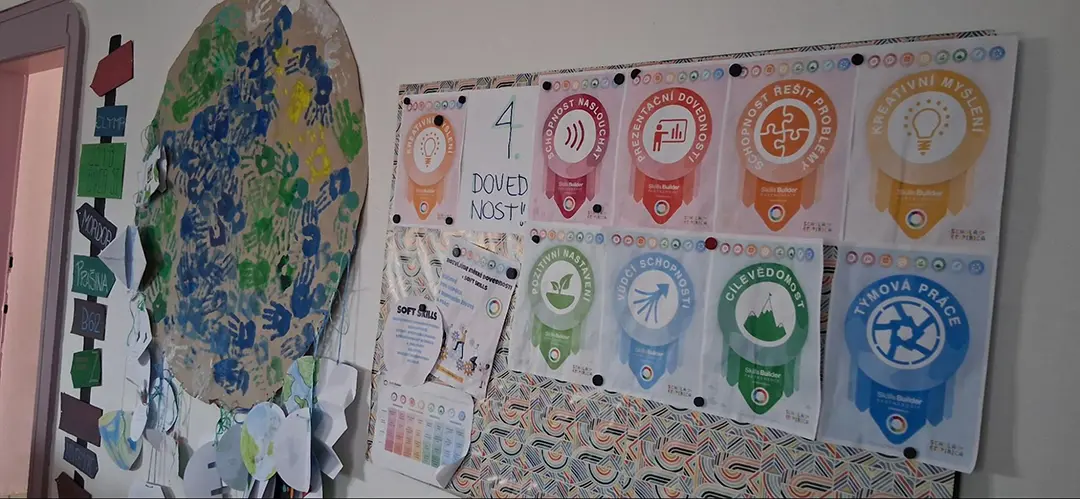
The framework provides an effective way of creating a shared language across the entire teaching staff while helping both teachers and students clearly recognise and understand the skills that are essential for the future. Visual reminders play an important role in our school. The Skills Builder icons and the focus skills currently being developed are displayed on notice boards at the school entrance, in the main lobby, and in individual classrooms, ensuring that the skills remain visible throughout the school environment. Teachers involved in the programme regularly share their experiences during staff meetings, reflect on students' progress in specific skills, and exchange practical ideas for embedding the methodology into everyday teaching in a natural and sustainable way, without creating unnecessary pressure or additional workload.

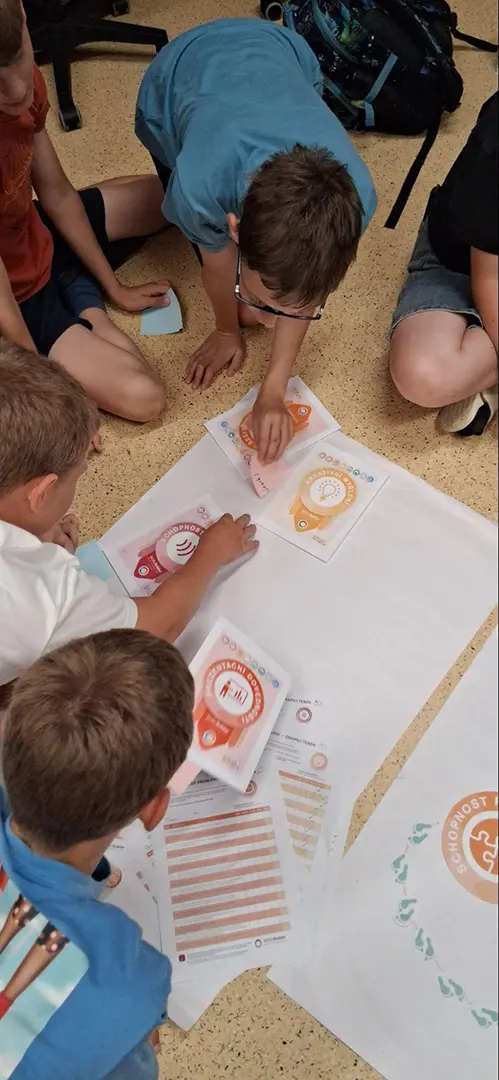
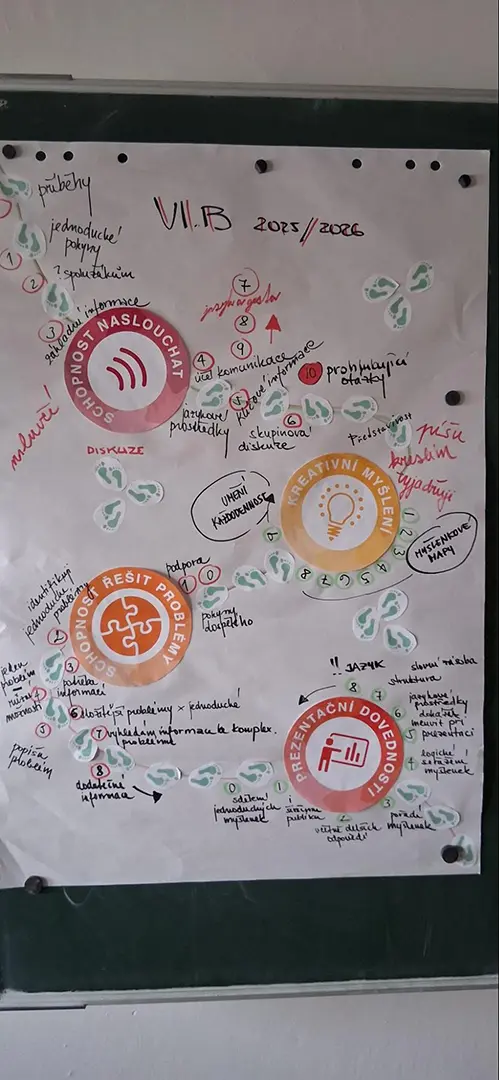
We adjusted the pace of implementation to match students’ age and developmental needs. In elementary classes, teachers most often focused on one skill per month. In lower secondary classes, a more flexible approach has proven to be effective, with one skill being developed over a two-month period. This allows students more time to practise, consolidate, and internalise individual steps within each skill.
We plan to continue with this approach. Assessment and reflection are systematically included at different stages of learning: at the beginning of each unit, throughout the learning process, and especially at the end. Students are given structured opportunities to reflect on their own contributions, either through verbal evaluation or through visual and creative forms of expression.

The focus on these skills has gradually become a natural part of our everyday school life not only during regular classes and homeroom periods, but also during school events. We rely heavily on our soft skills during orientation day, meetings of the student council, during workshop days at the end of the school year as well as during our field trips. We teach students to accurately name these skills, visualize them, and reflect on them so that they become an integral part of the curriculum. Linking them to existing cross-curricular themes has also proven very effective for us.
The school offers a wide range of off-campus activities. We can thus develop our soft skills during extra education programs, excursions, study abroad trips, Children’s Day (an event organised by Year 9 students for their youngest classmates), during Open House events, or during other extracurricular activities that naturally provide opportunities to develop creativity, communication skills, planning, problem-solving, and more.
We are committed to continuing and further strengthening the systematic development of students’ soft skills. Our main goal for the coming period is to involve more teachers at the lower secondary level, ensuring that students can smoothly build on the progress they have already made at the elementary stage. We aim to make the shared language and vision of Skills Builder an integral part of our school culture. We also want to strengthen the exchange of best practices among colleagues and make the topic of skill development a regular part of our methodological meetings. Our goal is to ensure that students leave our school well prepared for further education and their future professional lives. We believe that soft skills are an essential part of this preparation and play a key role in helping students succeed in the world beyond school.