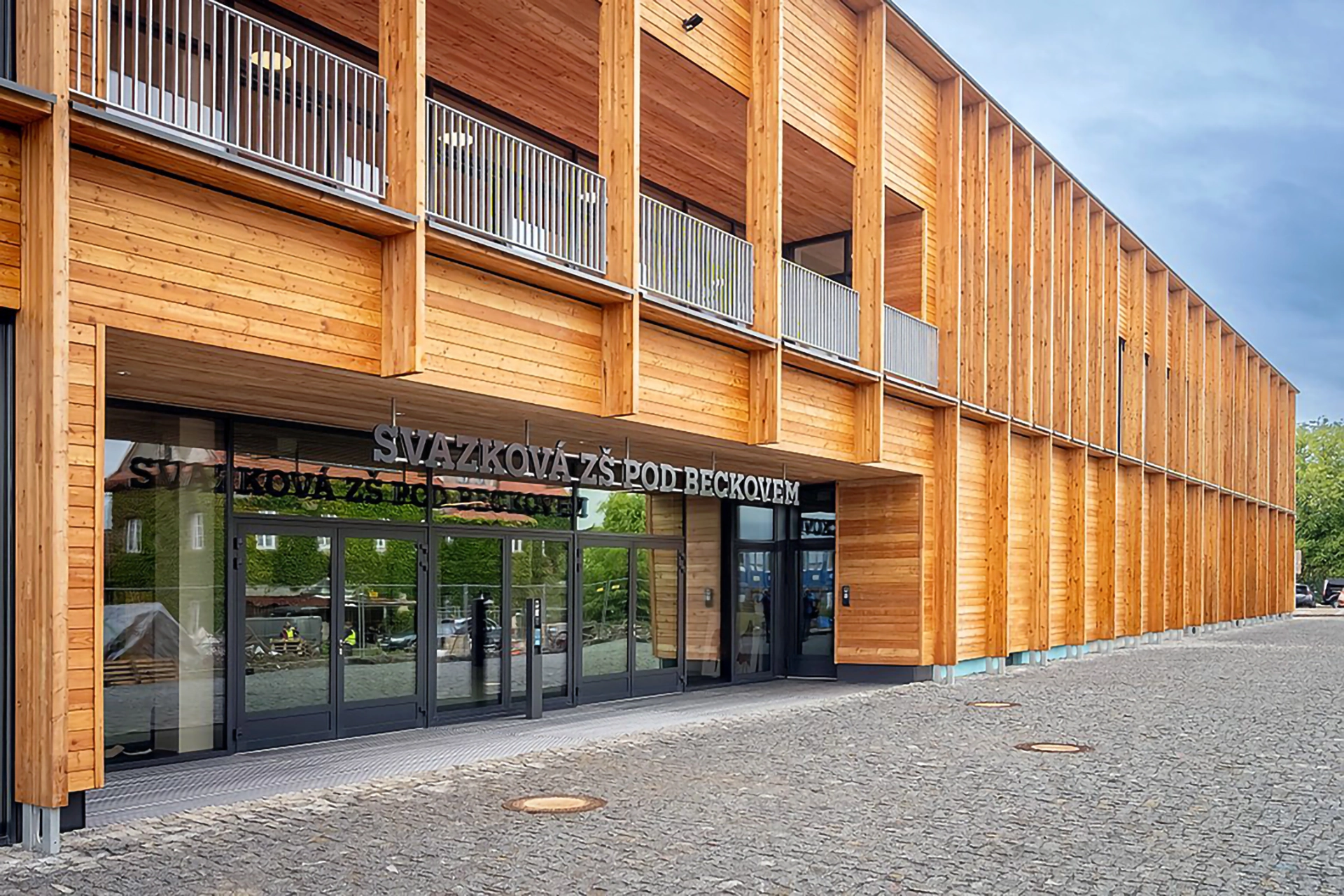
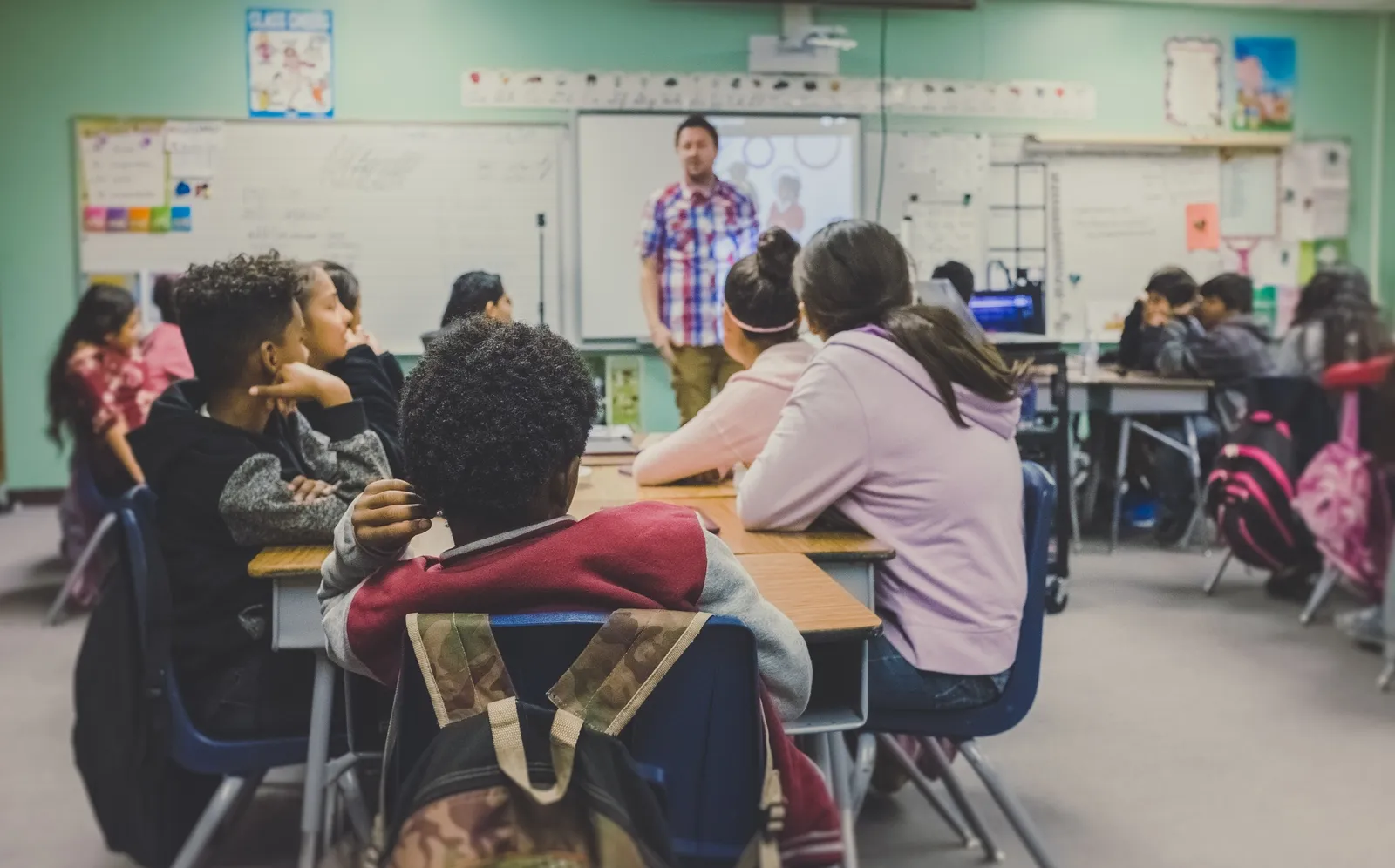
Pod Beckovem Primary School in Bašť is a modern joint-authority school that opened newly in the 2025/2026 school year for children from the association of municipalities of Bašť, Bořanovice, Líbeznice, Měšice, Předboj, and Zlonín. It was established as a collaborative project of these municipalities with the goal of providing accessible, high-quality education in the region. In the 2026/2027 school year, it will expand to include another building in Měšice. The school's vision is built on a safe environment, active learning, and developing real-life skills. Key components include outdoor learning, connecting teaching with practical experience, and integrated subjects that bring together different disciplines. Instruction is enriched by the CLIL method, native speakers, and an emphasis on using English across subjects. The school supports community events organized by the student council and in cooperation with parents (the Parent-Teacher Association). A significant role is played by the Skills Builder framework, which, through the systematic development of soft skills, is also integrated into school trips and projects. The educational approach also includes tripartites (student–parent–teacher conferences), parent cafes, and alternative assessment formats that support each student's individual progress.
The Skills Builder Accelerator program helps us naturally incorporate skills into daily teaching. Particularly within inquiry-based learning and critical thinking development, we strive to closely connect skills with educational content, enabling their meaningful application in practice. Competencies are also incorporated into our school educational program (Skolni-vzdelavaci-program-ZSPodBeckovem-20260601.pdf). Thanks to the Skills Builder methodology, skill development in our students is more systematic and balanced across all subjects, including advisory hours. Reinforcing soft skills also takes place outside the classroom—during field trips, school events, and outreach projects, such as student council charity initiatives or after-school care collaboration with local institutions (an animal shelter, senior center, library). In this way, students acquire skills in real-life situations. At the same time, the framework provides an important foundation for student self-assessment, which feeds into learning reflection, tripartite meetings, and final report card self-evaluations, guiding students toward greater responsibility for their own development.

We have integrated this principle into teaching primarily through visualization. In classrooms and common areas, we use visual materials that help students not only targetedly apply skills, but above all consciously recognize and correctly name them. Although soft skills are a natural part of instruction, naming and defining them is key to enabling students to actively work with them. Teaching staff use a shared language, making communication about skills clear and consistent across grade levels and subjects. For parents, we highlight these skills through the school website and social media. From Year 3 onward, a specific skill is always part of the weekly plan, contributing to regular and structured work. Simplicity is also reflected in daily teaching—skill logos are included on worksheets, tests, and other materials so students always have visual support.

We fulfill the principle of "start early and keep going" through a systematic, long-term approach to skill development. Every month (except September and June), the entire school focuses on one specific skill, which becomes a shared theme across grade levels and subjects. At the beginning of the month, homeroom teachers introduce the skill during personal and social education sessions, where students explore it through games, discussions, and group activities. As a result, students understand the skill well from the start and grasp its practical significance. In every classroom, the skill has a prominent place—a bulletin board poster that serves as continuous guidance. It is gradually updated with student work, practical examples, and reflections, turning the skill into a living part of the classroom environment. Throughout the month, the skill naturally weaves into daily instruction. Teachers consciously reference it using bulletin board visuals as well as skill logos in their teaching materials and monthly planning.

We measure progress in soft skills development systematically while emphasizing each student's individuality. In primary grades (1st level), evaluation takes place at the end of each month, primarily through peer assessment and self-assessment in student workbooks, using tools such as the skill wheel. This approach helps children gain better awareness of their growth and areas for further development. In lower secondary grades (2nd level), tracking progress is primarily the responsibility of homeroom teachers during personal and social education classes, working in close collaboration with subject teachers. Subject teachers provide ongoing feedback to build a comprehensive view of student development. Students regularly reflect on their own progress—orally, in writing, and via graphic reflection sheets used during tripartite meetings. Evaluating soft skills is also a regular part of the school's overall assessment strategy. In primary grades, it takes the form of descriptive feedback (alongside traditional report cards), while in lower secondary grades, report cards are supplemented with self-assessment forms and teacher observations. This comprehensive approach promotes student accountability for their learning and continued progress.

Each month is dedicated to a specific skill that the whole school focuses on. During its initial presentation in personal and social education classes, students set individual goals they aim to achieve by the end of the month. This encourages them to take ownership of their learning with a clear direction in mind. Throughout regular lessons, students consciously work on developing the skill across various subjects and scenarios. An essential part of the process is ongoing and summative evaluation of progress, conducted through multiple formats—verbal reflections, self-assessment, peer feedback, and report card evaluations.

In personal and social education classes, we revisit the current skill repeatedly, reinforcing its importance and strengthening it through targeted games and activities. Skill practice is increasingly becoming a seamless element of all subjects. Teachers regularly integrate skills into lessons, aligning lesson objectives with the monthly skill focus to foster meaningful, practical application. In primary grades, skill development is significantly enhanced through outdoor learning—such as regular Wednesday programs for 1st graders or after-school care activities spent mostly outdoors. In lower secondary grades, skills are further developed during field trips and excursions, giving students opportunities to apply them in real-world situations.
We put this principle into practice through targeted learning in out-of-school environments. In primary grades, outdoor learning contributes significantly by naturally building collaboration, communication, and independence. The after-school care program also organizes local community events and partners with local institutions, allowing students to explore the world beyond school while staying close to home. Skills are further deepened during trips and school-wide events, where students face real situations and learn to navigate them in practice (e.g., a 7th-grade cross-border trip involving communication with native speakers in everyday settings). The student council plays a vital role by organizing activities and building civic and social competencies. Community events hosted by the Parent-Teacher Association also create opportunities to engage with the wider community. The pinnacle of this approach is the end-of-year lower secondary expedition trip, where students apply their acquired skills holistically.
Looking ahead, we plan to continue systematically deepening the soft skills development of our students. Our priority is to keep embedding these skills naturally and regularly into everyday teaching, ensuring they remain a solid and fundamental part of daily learning. At the same time, we want to expand the framework further into the after-school care program, where we see great potential for skill growth in an informal setting. Another important step is involving parents so that the core principles of working with skills at school extend naturally into children's lives outside of school. Long-term, we focus primarily on building resilience, independence, and responsibility in our students—qualities we consider vital for their personal and academic success. Our goal is for students not only to master these skills, but to apply them consciously and independently across diverse real-life situations.