Beyond Resolutions: A Structured Approach to Building Essential Skills This Year

January has arrived. For many, this is the time of the year to set goals, write resolutions, and promise ourselves that this year will be different.
Yet, statistics show that most resolutions fade quickly. Why? Usually, it’s not a lack of willpower; it’s a lack of structure.
We set vague intentions like "be a better communicator," "improve my leadership," or "get better at solving problems." These are noble goals, but without a roadmap, they are just wishes. How do you measure "better communication"? How do you know if you’ve actually improved at "solving problems"?
This year, let’s commit to building tangible, measurable essential skills. And to do that effectively, we need the right tool: The Skills Builder Universal Framework.
Why Focus on Essential Skills?
Essential skills are the fundamental abilities we need to succeed in education, employment, and life. They are the connective tissue that allows us to apply our technical knowledge effectively.
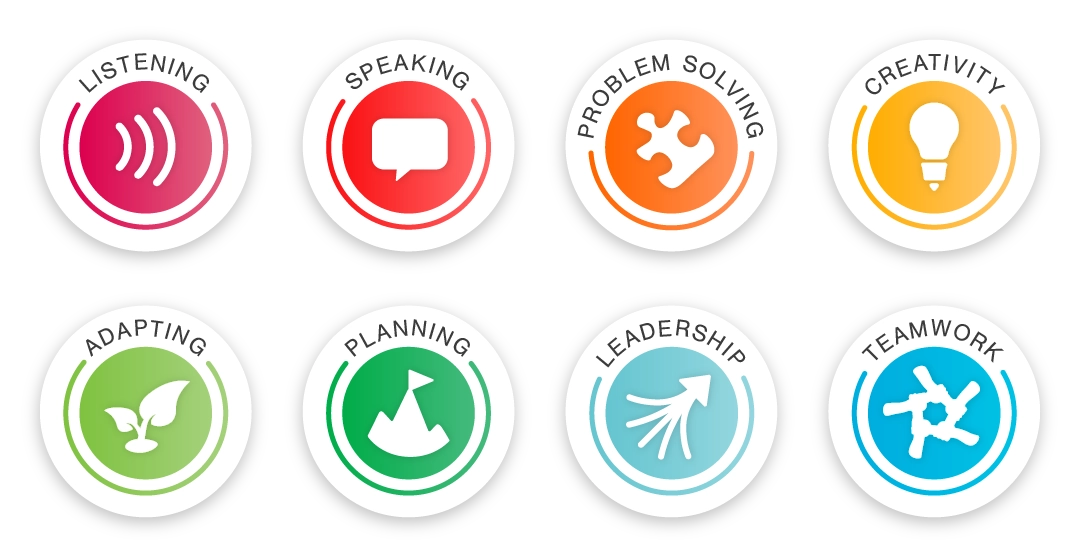
At Skills Builder, we define these eight highly transferable skills as:
Listening: The receiving, retaining and processing of information or ideas.
Speaking: The oral transmission of information or ideas.
Problem Solving: The ability to find a solution to a situation or challenge.
Creativity: The use of imagination and the generation of new ideas.
Adapting: The ability to use tactics and strategies to overcome setbacks and achieve goals.
Planning: The ability to set clear, tangible goals and devise a robust route to achieving them.
Leadership: Supporting, encouraging and developing others to achieve a shared goal.
Teamwork: Working cooperatively with others towards achieving a shared goal.
The Missing Link: The Universal Framework
Building skills can be difficult due to their subjectivity. Concepts like 'good teamwork' are often vague and interpreted differently by everyone.
The Skills Builder Universal Framework solves this problem. It changes the conversation by taking these abstract concepts and breaking them down into a rigorous, sequential sequence of steps.
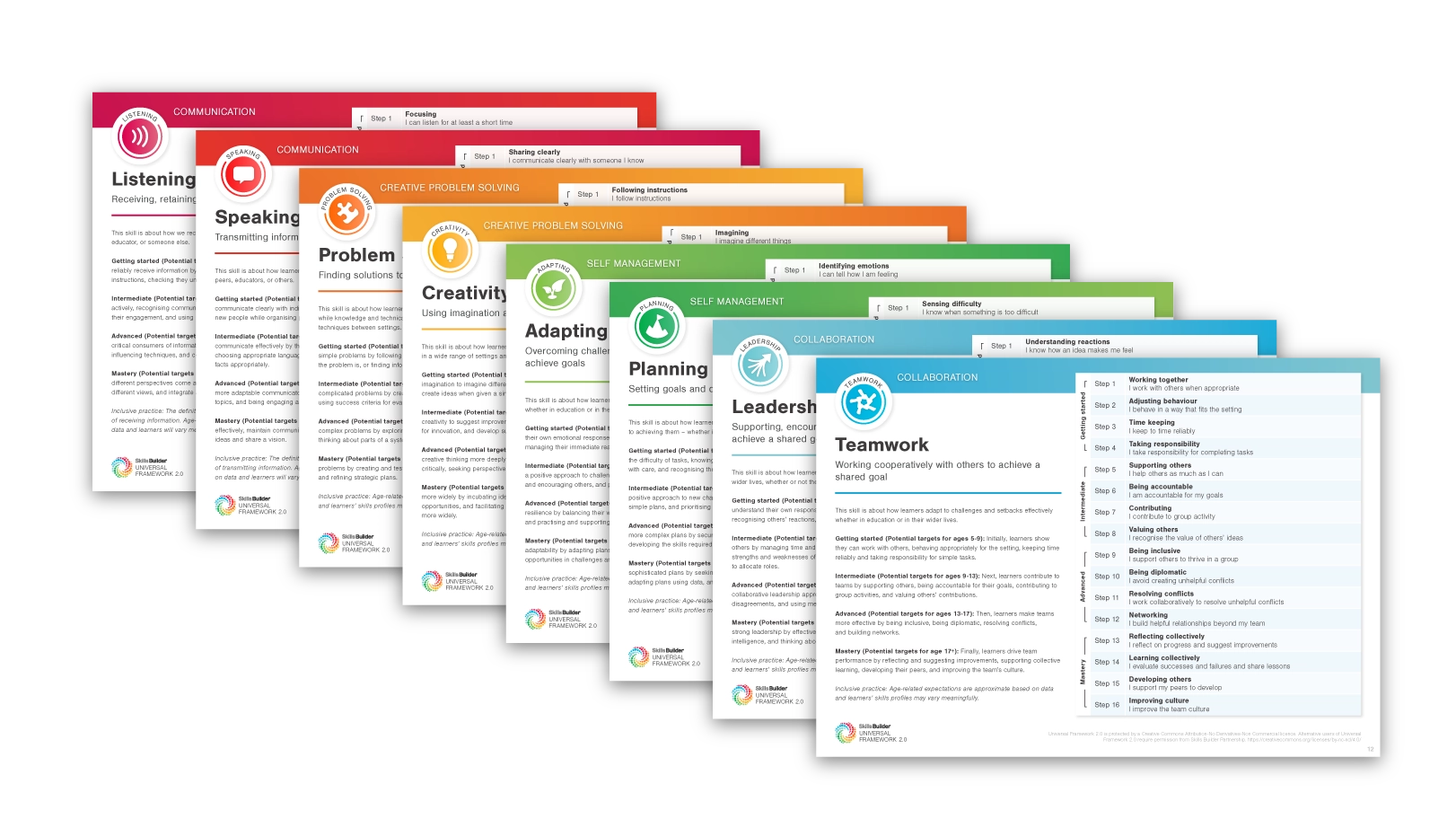
Think of it as a GPS for personal development. It doesn’t just tell you the destination ("Be Creative"); it shows you the exact turn-by-turn directions to get there, from absolute beginner to mastery. It provides a shared language that crosses borders, sectors, and education levels, allowing us to define, measure, and teach these crucial skills with clarity for the first time.
Your New Year Action Plan: 3 Steps to Using the Universal Framework
How do you move from reading about the Universal Framework to actually using it to fuel your growth this year? Here is a practical three-step approach for individuals, educators, and employers alike.
Step 1: Establish Your Baseline
You can’t plan a route if you don’t know your starting point. Many people overestimate their abilities in areas like listening or teamwork because they’ve never had an objective measure.
The Action: Use the Universal Framework to honestly assess where you currently stand. Read through the steps of a specific skill. At what step can you confidently say, "I do this consistently"? That is your baseline.
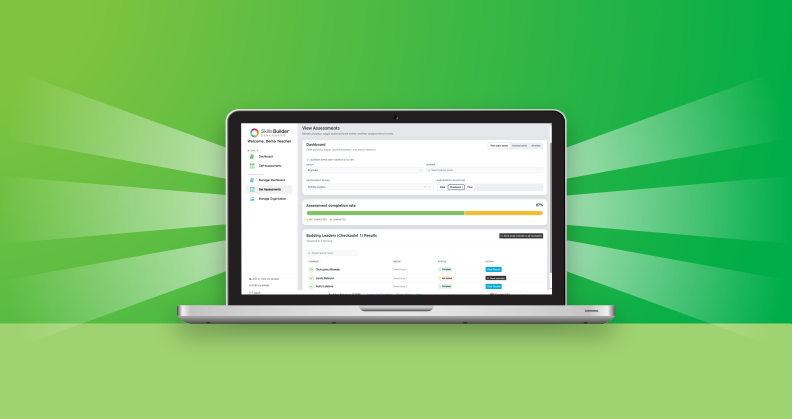
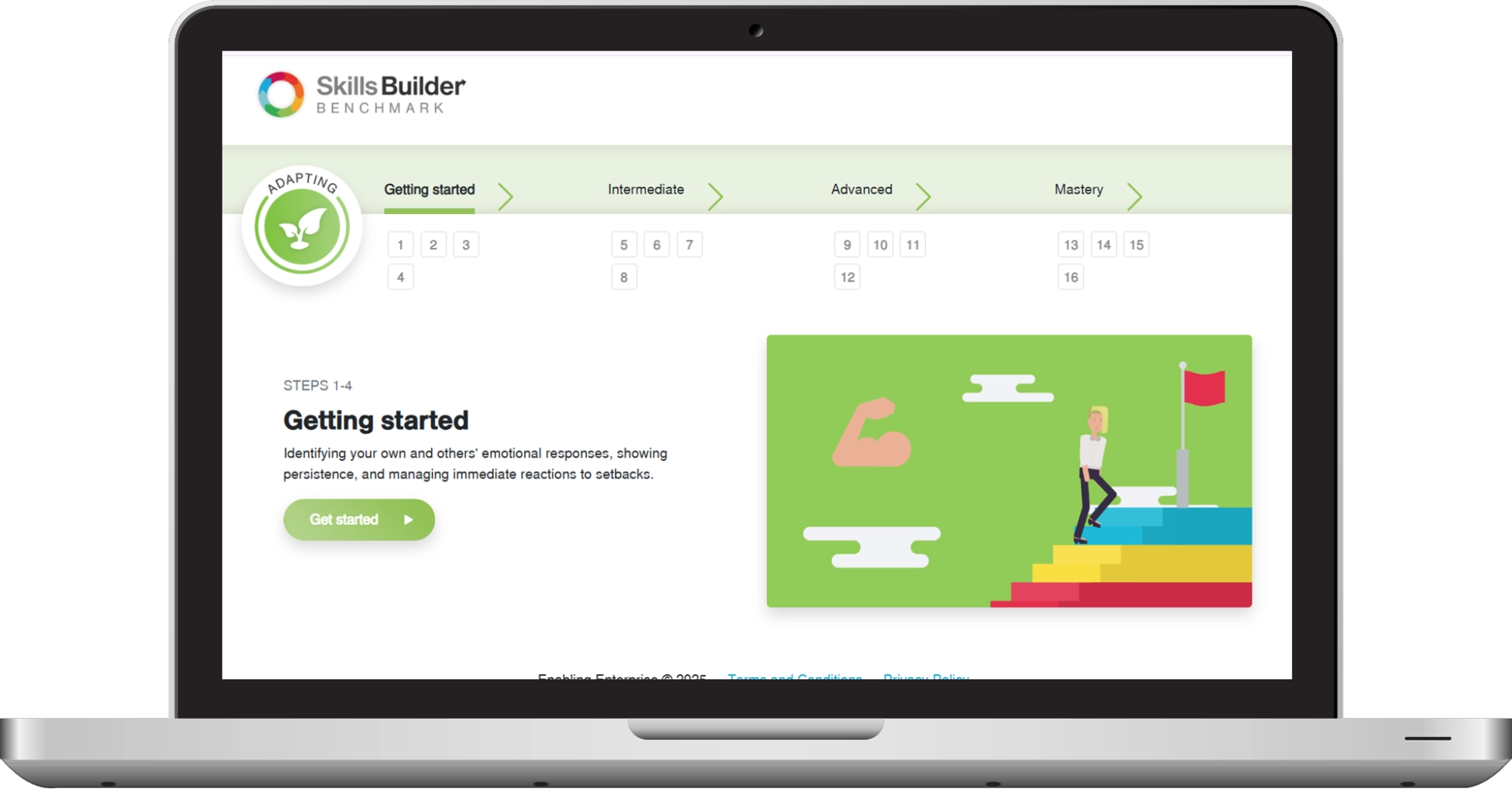
Top tip: Try Skills Builder Benchmark to get a personalised profile of your current skill levels.
Step 2: Focus on the "Next Step"
The biggest mistake people make is trying to overhaul everything at once. You cannot master all eight essential skills simultaneously.
The Action: Choose just one or two skills that are most critical to your goals this year. Are you stepping into a management role? Perhaps focus on Leadership and Speaking. Are you facing complex new challenges? Focus on Problem Solving.
Once you’ve chosen a skill, look at your baseline from Step 1, and identify the immediate next step in the Framework. Forget the distant steps at the top of the ladder; laser-focus on just moving up one rung.
Step 3: Deliberate Practice
The magic of the Universal Framework is in the descriptors for each step. They turn vague goals into concrete actions.
The Action: Take the descriptor for your "next step" and turn it into a weekly practice.
- Example: If you are working on Listening, and your next step is Step 5 ("Listen to people in a range of roles and contexts, and show I have understood them"), don't just tell yourself to "listen better."
- The Practice: In your next three meetings, actively summarise what a colleague from a different department said before adding your own point. That is deliberate, measurable practice based on the Universal Framework.
A Year of Structured Growth
The feeling of progress is a powerful motivator. By using the Universal Framework, you move away from the frustration of vague resolutions and toward the satisfaction of measurable growth.
This year, don't just hope for a better version of yourself or your team. Build it, step by structured step.
Ready to start? Explore the Universal Framework and our suite of tools for educators, employers, and individuals at https://www.skillsbuilder.org/global/universal-framework