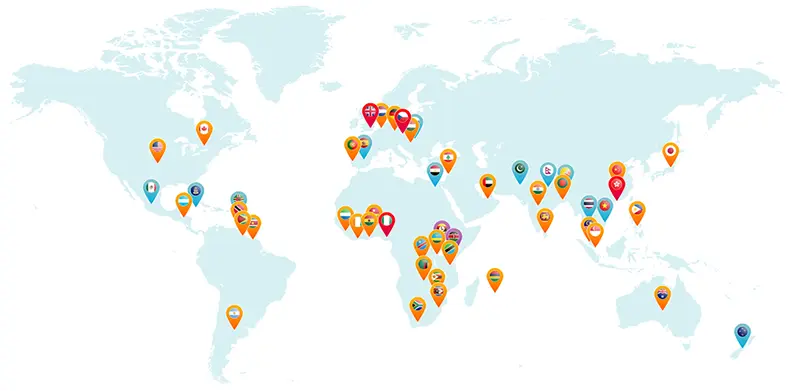
While many educational systems have spent the mid-2020s focused on risk mitigation, data privacy disputes, and defensive classroom bans on generative models, East Asia has adopted a starkly different playbook. In Hong Kong (China), Singapore, Taiwan, and Mainland China, the narrative around Artificial Intelligence is not one of containment, but of rapid, high-appetite orchestration.1
Hong Kong (China), in particular, is executing an aggressive digital transition, shifting its highly competitive educational landscape away from pure technical performance toward a hybrid model where code logic must connect with human values.
As the territory navigates this transition under its unique school governance model, the structural question is no longer about technology access, but about human capability. To prevent the automation of intellect, Hong Kong educational leaders are turning to their established generic skills framework2 and reimagining these as the essential skills to keep human agency at the centre of the machine age.
The high-appetite horizon: fast-paced AI adoption in Hong Kong

The societal appetite for AI in Hong Kong is distinctively positive, viewed across government, business, and community sectors as a generational economic opportunity. Marco Shek, an educational innovator leading Ednovators, contrasts this regional momentum with the caution observed further west:
“I think East Asia is having more of a positive leaning towards the positive side of AI. Whereas when I talk to European educators, they’re like, ‘Wait a minute. We don’t want that.’ In Hong Kong, you see AI embedding in day-to-day teaching already - from planning to teaching to learning.”
This societal push is heavily backed by the state. Following strategic directives in the Chief Executive’s Policy Address to accelerate digital education, the Education Bureau (EDB) launched a major capital injection via the AI for Empowering Learning and Teaching Funding Programme. This initiative allocated substantial one-off grants to every publicly-funded and Direct Subsidy Scheme school to
immediately deploy AI-powered tools and enhance student digital literacy.3
The administration’s tactical approach has been deliberately experimental: “Their policy tactics is: We’ll give you money first. You figure out what to do,” Shek explains. By funding deployment ahead of a centralised territory-wide framework, the government has incentivised decentralized school-based micro-innovations, with the intent to harvest and formalise what works best.
Consequently, the tech wave is no longer confined to specialized Information and Communication Technology (ICT) classrooms. Language, history, and arts teachers are actively experimenting with generative tools to differentiate instruction. Yet, underneath this enthusiasm lies an underlying professional anxiety. Educators find themselves hopping onto a high-speed train while still trying to decode what long-term AI literacy means for child development and deep conceptual learning.
“Generic Skills” and the school ecosystem
To understand how Hong Kong intends to scale human capability alongside machine deployment, one must parse its unique institutional infrastructure. The local system encompasses more than 1,000 primary, secondary, and special needs schools. Crucially, less than 10% of these are managed directly by the state. Over 70% operate as aided schools, fully state-funded but independently managed by School Sponsoring Bodies - predominantly non-profit organisations, religious temples, churches, and medical charities with centuries of
local history.4
Backed by the government’s School-Based Management policy, these institutions possess considerable structural autonomy to interpret the central curriculum and design localized learning models. Furthermore, over the past two decades, Hong Kong has embedded business operational logic into its schools. They operate as performance-driven, board-accountable institutions, making them uniquely agile and entrepreneurial when responding to systemic disruptions like AI.5
The Learning to Learn 2+ Framework
When it comes to human competencies, Hong Kong does not use the phrase “essential skills”; instead, the central curriculum - codified under the EDB’s Learning to Learn 2+ blueprint - relies on ‘Generic Skills’. These are organized into three core clusters:
- Basic Skills: Encompassing foundational communication, mathematical logic, and baseline IT literacy.
- Thinking Skills: Centering explicitly on critical thinking, open-ended creativity, and structured problem-solving.
- Personal and Social Skills: Prioritizing collaboration, self-management, and lifelong self-learning capabilities.
This framework is layered with 12 formalized priority values, including perseverance, empathy, law-abidingness, and national identity.
However, the structural paradox of the Hong Kong system rests in the execution blueprint. While the government mandates what these generic skills are, it provides no standardized pedagogical architecture for how to measure or systematically develop them step-by-step. Teachers are left to interpret these human attributes on their own, a challenge that community organisations such Ednovators are looking to support.
Humanities values meet technical logic
As AI handles routine coding, calculation, and drafting, Hong Kong’s educational leadership has realized that a narrow focus on STEM (Science, Technology, Engineering, and Mathematics) is an incomplete strategy for national competitiveness. The territory’s discourse is shifting toward cultivating a cross-disciplinary talent pool capable of contextualising and directing machine outputs.
Yet, Marco Shek notes that there are still questions that need to be answered:
“How can we tap into the potential but at the same time, when do we stop? Or when do we go back to the traditional or conventional way of teaching and learning?”
Without anchoring AI usage to robust human assessment - specifically the thinking skills of Critical Thinking and Problem Solving - the immediate efficiency gains of automated homework completion risk degrading long-term analytical capacity.
Innovation at scale: grassroots playbooks for a regional blueprint
To bridge the gap between top-down funding and practical classroom application, social enterprise agility is proving essential. While the Education Bureau finalises its official territory-wide AI policy framework, organisations on the ground are constructing the practical tools teachers need.6
Ednovators and Skills Builder Partnership
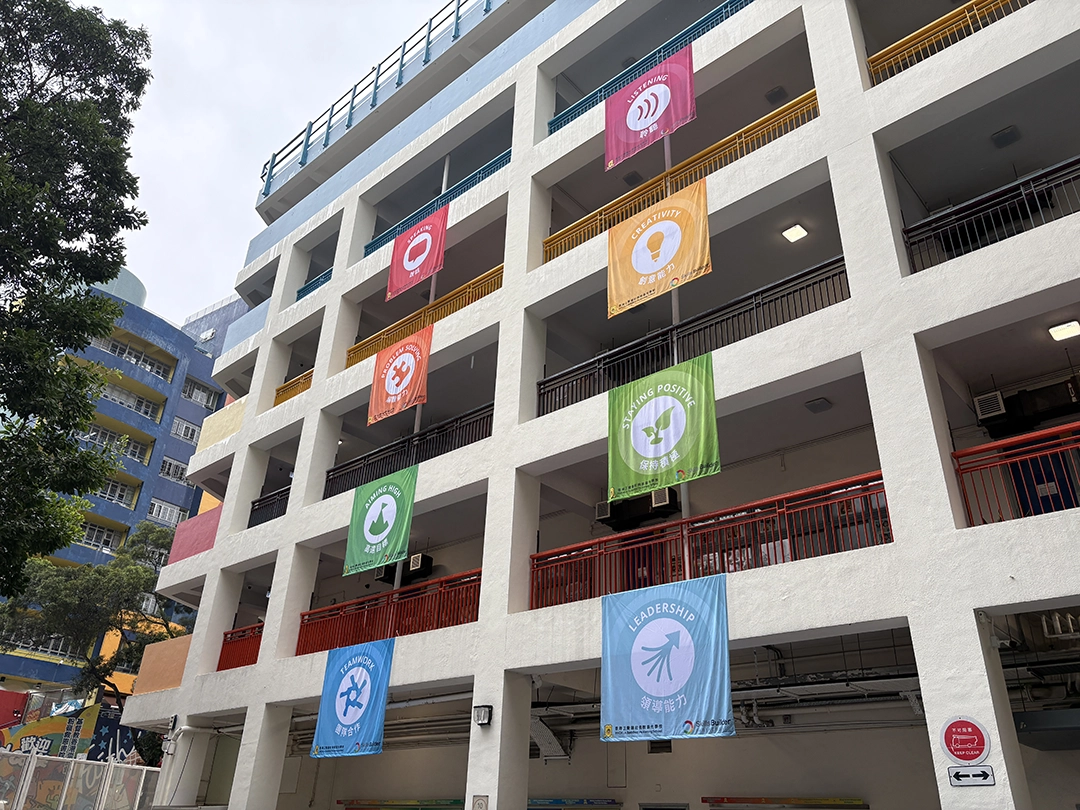
Ednovators, working in collaboration with the Skills Builder Partnership, is addressing this by providing a common, highly structured language for Hong Kong’s ‘generic skills’. By taking abstract competencies like communication, creativity, and collaboration and mapping them to the explicit, observable 16 steps of the Universal Framework, they give schools an actionable classroom playbook.
This progressive framework allows teachers to design project-based curricula where human verification and machine interaction coexist. For instance, when a student uses a generative tool to plan a science project, their performance is evaluated not on the speed of the output, but on their ability to structure problems, evaluate algorithmic bias, and collaborate within human teams to iterate on the solution.
Preparing for the territory-wide framework
This grassroots model is setting the stage for systemic scaling. As the territory prepares for the official rollout of the national AI education framework, the insights gathered by Ednovators and other grassroots innovators are helping to demonstrate how human skills can support digital transitions.
Conclusion
Hong Kong’s digital strategy proves that technical fluency is only one half of the equation. By backing their AI funding programme with a clear focus on the ‘generic skills’, they are building an educational ecosystem that views technology as an accelerator of human capability, rather than its replacement. In the machine age, true competitive advantage belongs to the societies that invest with equal rigour in the human.
References
- Education Bureau (EDB) (2024) Chapter 3: Addressing Specific Learning Elements of the Curriculum — Curriculum Guide for Special Schools. Hong Kong SAR Government. Available at: https://www.edb.gov.hk/attachment/en/curriculum-development/curriculum-area/special-educational-needs/curriculum_guide_for_special_schools/Chapter%203_CGSS%20(2024)_e.pdf [Accessed 19 May 2026].
- Education Bureau (EDB) (2026) LCQ10: Utilising artificial intelligence to enhance learning and teaching effectiveness. Hong Kong SAR Government Press Release, 4 February 2026. Available at: https://www.info.gov.hk/gia/general/202602/04/P2026020400182.htm [Accessed 19 May 2026].
- Hong Kong Government (2025) Hong Kong - The Facts: Education. https://www.gov.hk/en/about/abouthk/factsheets/docs/education.pdf
- Hong Kong SAR Government (2025) Govt launches $500m AI scheme. news.gov.hk, 16 December 2025. Available at: https://www.news.gov.hk/eng/2025/12/20251216/20251216_112101_776.html [Accessed 19 May 2026].
- Hong Kong SAR Government (2025) Promote the Integrated Development of Education, Technology and Talents. Policy Address 2025 Supplement. Available at: https://www.policyaddress.gov.hk/2025/public/pdf/supplement/supplement-07_en.pdf [Accessed 19 May 2026].
- Our Hong Kong Foundation (2026) Establishing an AI Education Framework to Nurture a New Generation of Critical Thinkers. Commentary, 10 March 2026. Available at: https://www.ourhkfoundation.org.hk/en/media/commentaries/%E5%88%B6%E5%AE%9Aai%E6%95%99%E8%82%B2%E6%A1%86%E6%9E%B6-%E5%9F%B9%E8%82%B2%E6%80%9D%E8%BE%A8%E6%96%B0%E4%B8%80%E4%BB%A3?__cf_chl_f_tk=bPwxwFdIlQnWOz2j2kz9LbpObZeWU7Furb78DOET8mg-1783083883-1.0.1.1-.eO1InGR.C6ayCp6O2W_26ip0IFfq1ZhandQ0YgtTPg [Accessed 19 May 2026].
- Shek, M. (2026) Interview with Marco Shek (Ednovators Hong Kong): AI and Generic Skills Integration. [Interview] Interviewed by Tom Ravenscroft, 19 May 2026.