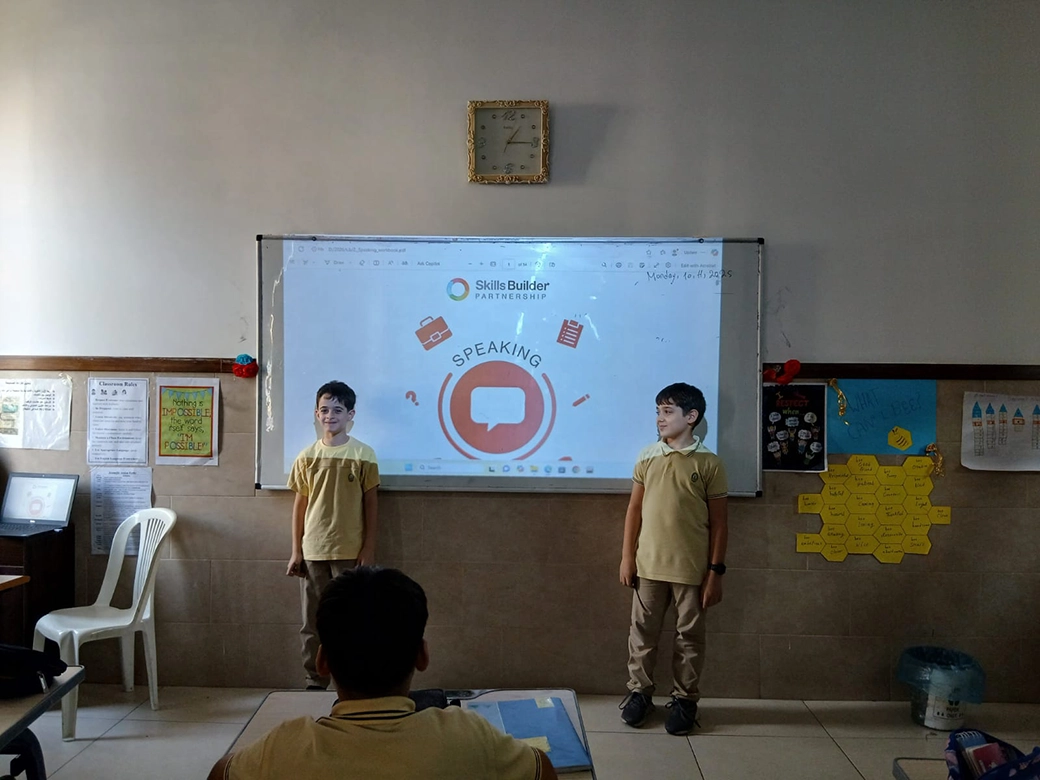

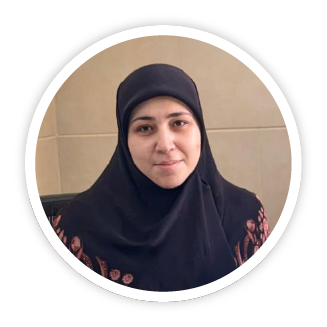
We recently sat down with Sokaina, the inspirational English Coordinator and Skills Leader at Al-Abrar Secondary School in Beirut, Lebanon. Al Abrar is a shining example of systematic essential skills development, having achieved the Skills Builder Gold Award for their commitment.
Sokaina shared her school’s journey, from facing inconsistent teaching methods to achieving school-wide transformation through the Skills Builder Global Accelerator Programme.
A journey of commitment: embedding skills across the curriculum
With the Global Accelerator as a catalyst for change, the school adopted a systematic approach to growth, focusing on four strategic pillars:
- Teacher Empowerment: Comprehensive training for all staff.
- Pedagogical Excellence: Developing model lessons to set a gold standard for skill development.
- Environmental Consistency: Establishing a school-wide 'common language' through consistent resources.
- Community Engagement: Activating parents as partners in the skill-building process.
"The results are evident in every cycle," Sokaina explains. "At Al-Abrar, we didn't just add Skills Builder; we embedded the approach into daily learning. Through exhibitions, fairs, and creative projects, our students are proving they are ready for the challenges of higher education and their future careers.
Overcoming inconsistency with the Global Accelerator
Before joining the Accelerator Programme, Al-Abrar faced a common challenge: inconsistency.
"Deep learning skills were part of our curriculum, but teachers weren’t always using the same language, criteria, or methods," Sokaina noted. "Each educator created their own tools, leading to variation in how skills were taught and assessed across classes and grade levels."
The Accelerator Programme provided the essential structure needed to solve this.
"By joining the programme, we unified our language, methods, and assessment practices across all subjects. The structured progression model provided by Skills Builder helped teachers use common terminology, clear steps, and consistent assessment tools."
This unified approach dramatically strengthened students’ skills, particularly Teamwork, Creativity, Speaking, Listening, and Problem Solving, ensuring they were taught explicitly and consistently.
The power of a shared language: The Universal Framework
The most profound impact on daily communication came directly from the Universal Framework.
"The Universal Framework gave us a shared language that teachers, students, and parents now use confidently," Sokaina said. Skill steps became part of everyday conversations.
Students naturally own their progress, using phrases like:
- “I’m working on improving ideas.”
- “I need to listen more carefully before responding.”
This shared vocabulary extended to parents through homework activities, creating vital alignment between school and home life.
The biggest change: student confidence
.jpeg)
When asked about the single biggest positive change in students, Sokaina pointed to one thing: confidence. Instead of 'being good' at teamwork or creativity, students can now identify the specific behaviours, like 'contributing ideas' or 'evaluating options' that lead to success.
"Understanding the skill steps gives students a sense of ownership over their progress," she stated. "They participate more actively in fairs, presentations, plays, and real-world projects."
The results of this structured approach are being celebrated far beyond the school gates. Al-Abrar students are now regular features at major public challenges, including science fairs at the Lebanese University and academic events at the American University of Beirut. They step onto these platforms not just as participants, but as individuals who know they have the skills to thrive.
The transformative element: systematic structure
For Al Abrar, the most transformative element of the Accelerator Programme was the systematic structure it brought.
"Through training, model lessons, learning walks, continuous feedback, and clear progression steps, the Framework became a non-negotiable part of teaching across all cycles," Sokaina said. This systematic approach helped them refine curriculum mapping, design new resources, and apply a unified approach that strengthened teaching and assessment school-wide.
Applying the Principles of Best Practice
Al-Abrar’s success hinges on meticulously applying the Six Principles of Best Practice:
- Keep it simple: Establishing a clear common language through displays and shared resources.
- Start early, keep going: All cycles adopting the same skill language from early years upward.
- Measure it: Using observations, home work activities, checklists, and feedback.
- Teach directly: Using explicit model lessons and skill-focused sessions.
- Keep practising: Skills are embedded across all subjects, from languages to science, art to drama and sports.
- Bring it to life: Students apply their skills in real-life contexts like exhibitions, projects, and competitions.
Sokaina’s advice to prospective schools
.webp)
Sokaina’s advice to any school considering the programme is clear:
- Start simple and set clear goals, building a common language from the beginning.
- Use the Skills Builder Hub- it provides clear guidelines and makes implementation easier.
- Stay consistent and trust the process!
"The impact becomes visible quickly," she concluded. "The programme does not only develop students’ skills- it transforms the way the entire school thinks, communicates, and works."
If, like Sokaina, you are interested in joining the Global Accelerator Programme, register your interest here.