Reflections from careers education in Japan

Landing on a bright cloudless Tokyo morning, I stepped out onto Japanese soil for the first time since I’d lived briefly in the country as a child 35 years before.
The occasion was the annual conference of ASKNET and an opportunity to dive into the future of careers education in Japan, alongside the chance to visit schools, meet officials, and speak with Japanese social entrepreneurs supported by ETIC.
ASKNET is one of the earliest organisations in Japan to introduce and promote career education models in the country. It works closely with elementary, junior high, and high schools to develop effective career education programs and internships, connecting them with local communities. It also serves as the secretariat of the Japan Career Coordinators’ Network Association.
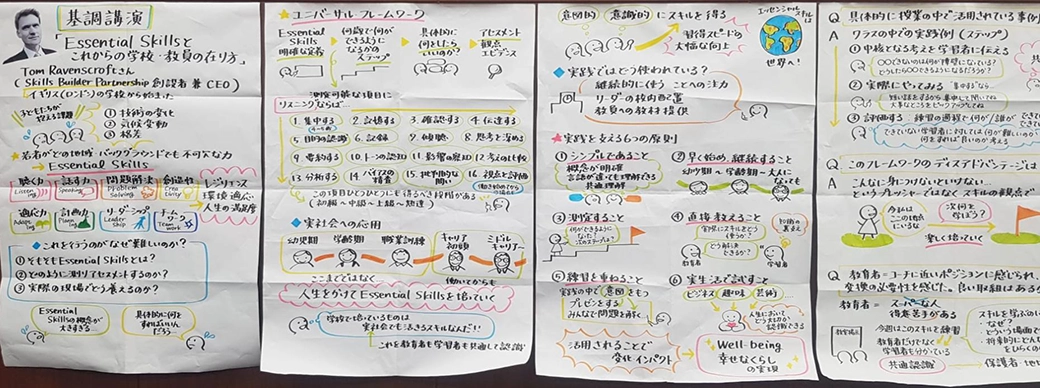
The ‘ENGINE’ conference is a brilliant initiative, born from a desire to energise and connect those passionate about educational activities across Japan. This year, it was an honour for me to deliver a keynote speech aiming to bring to life the Skills Builder approach and our Universal Framework.
In doing so, I was able to share not just what we’ve learnt in redeveloping Universal Framework 2.0 but also the learnings from our growing international partnership as partners across the world grapple with how to support every learner to build the essential skills to thrive.
The thoughtfulness of the questions was a reflection of the earnest, thoughtful engagement (on a Saturday no less) of careers coordinators, teachers, principals, school superintendents and government officials. To give you a sense, we ranged through questions like:
- When making essential skills a ‘common language’ what were the key compromises that you had to make and what principles did you refuse to compromise on?
- In a context where classrooms include highly diverse studies, the more students push to help students acquire skills, the more likely it is that some students may struggle to keep up with those approaches. What do you think about this tension?
- In support of developing essential skills in education, what kind of shared measurement should we adopt to move beyond entrenched practices and evaluation systems?
- What challenges and strategies have you found effective in translating frontline educator passion into sustainable systems?
The remarkable quality of conversations at ENGINE highlighted the progress being made in career education in Japan. ASKNET, supported by ETIC, is leading a pioneering effort to develop and standardise a national career education benchmark, drawing inspiration from the UK’s Gatsby Benchmarks.
It struck me that the challenge in Japan reflected what we have seen elsewhere in the world: that aspirations to build essential skills are near universal and that they are increasingly seen as a vital part of a good education. However, the focus must be on how to bridge the gap between aspirations and classroom practice - including how to equip educators with the confidence, training and resources to effectively assess and teach essential skills in their classrooms.
Working with committed Careers Coordinators, the teams at ASKNET and ETIC and that wider ecosystem of government, NGOs and education will be vital to realise this ambition. A first step will see the Universal Framework translated into Japanese by the summer.
We’re excited to continue to work in partnership with ASKNET, ETIC and others in Japan to realise their ambition of careers education that sets up every young person with the knowledge, experience and skills to succeed.