
At Skills Builder Global, our global mission is clear: to ensure that one day, everyone builds the essential skills they need to thrive.
Working alongside schools and colleges across the world, institutions embed six core principles that drive measurable learner progress: Align, Plan, Measure, Teach, Practise, and Apply. Together, these principles form a joined-up approach that sets every learner up for success.
While all six principles are crucial, Principle 1: Align serves as the starting block for any transformational journey. Without alignment, even the best-designed teaching strategies risk becoming fragmented or isolated.
Here is a closer look at why alignment matters, what it looks like in practice, and how schools and colleges can evidence their achievements to earn a Skills Builder Award.
Why it matters
Any effective approach to skill-building starts with a shared vision.
Principle 1 is about ensuring that educators, leaders, learners, and the wider community share a common goal: recognising that building essential skills is a vital part of a good education, valued right alongside academic achievement.
Crucially, alignment requires a common language. Essential skills like Problem Solving, Creativity, or Listening can mean different things to different people. By adopting the Skills Builder Universal Framework, institutions ensure that every teacher, student, and parent talks about and understands these skills in the exact same step-by-step way.
%20with%20white%20fade%20on%20the%20bottom%20row.webp)
When an entire community aligns around this shared vocabulary, learners build a consistent mental map of their own development across year groups and subjects.
What to aim for:
Schools and colleges that successfully embed Principle 1 focus on creating visibility, fostering understanding, and embedding essential skills into institutional culture.
Key practices include:
- Championing the value of essential skills: Demonstrating that skill progression matters just as much as academic attainment. Institutions do this by sharing skill updates in reports, parent meetings, and celebration assemblies.
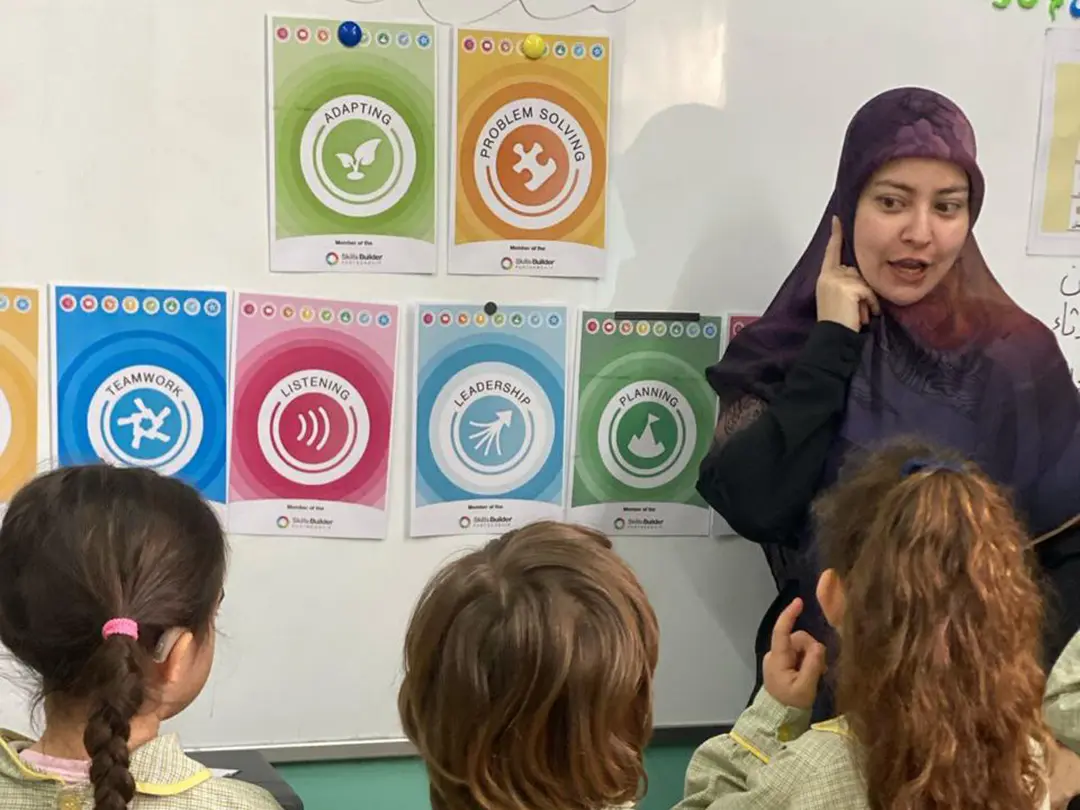
- Building visual awareness: Displaying skill icons and posters in hallways, classrooms, and corridors so the language stays front-of-mind.
- Introducing the Universal Framework to learners: Explicitly introducing students to the step-by-step nature of skill progression.
- Consistent language across community life: Using the language of skill steps in newsletters, staff meetings, educator training, and overall development plans.
Reflecting on your practice
As you look to embed Principle 1 within your institution, consider these reflection questions:
- How have you raised awareness of essential skills across your school or college community?
- How are you ensuring that learners, educators, and leaders consistently use the exact language of skill steps from the Universal Framework?
By establishing a clear, aligned foundation today, you set the stage for effective planning, direct teaching, and real-world application tomorrow.
For practical inspiration, examples from Skills Builder approved institutions on the Case Study Showcase.