The Essential Skills advantage: Leading the AI Era through human capability

The global landscape of work is undergoing its most profound transformation since the Industrial Revolution. The World Economic Forum estimates that roughly 1.1 billion jobs could be reshaped by technology over the next ten years, and artificial intelligence is projected to affect 86% of businesses by 2030.
However, a landmark insight paper from Skills Builder Global tells a much more human story. Authored by founder Tom Ravenscroft, the work is supported by KPMG International as a founding partner.
The Essential Skills Advantage: Human Skills in an Age of AI reveals that as generative AI becomes an everyday workplace tool, our true competitive advantage lies in our uniquely human capacity for creativity, judgment, and collaboration.
Essential Skills enable AI success
While technical fluency is valuable, it cannot succeed in isolation. To safely manage, optimise, and extract real value from AI tools, workers must rely on the eight essential transferable skills defined by the Skills Builder Universal Framework: Listening, Speaking, Problem Solving, Creativity, Adapting, Planning, Leadership, and Teamwork.

The paper's empirical findings show that human skills are the vital enablers of technology:
- Higher proficiency, greater usage: Professionals who frequently use AI in the workplace possess an essential skill score that is 6% higher on average than non-users. Furthermore, a worker in the upper quartile of essential skill proficiency uses AI 30% more at work compared to someone in the lower quartile.
- The "value-add" skills: Regular AI users score significantly higher in specific framework steps. Humans must act as the ultimate strategic roadmap creators and critical filters to evaluate algorithmic bias and validate machine outputs.
- Mitigating AI anxiety: The transition to AI has introduced workplace stress, with UK workers required to use AI reporting 43% higher levels of anxiety. However, upskilling workers in Adapting is associated with a 9% decrease in workplace anxiety, while Speaking and Teamwork upskilling links to a 7% reduction, proving that essential skills act as a vital psychological shock absorber.
Global learnings: How diverse nations are responding
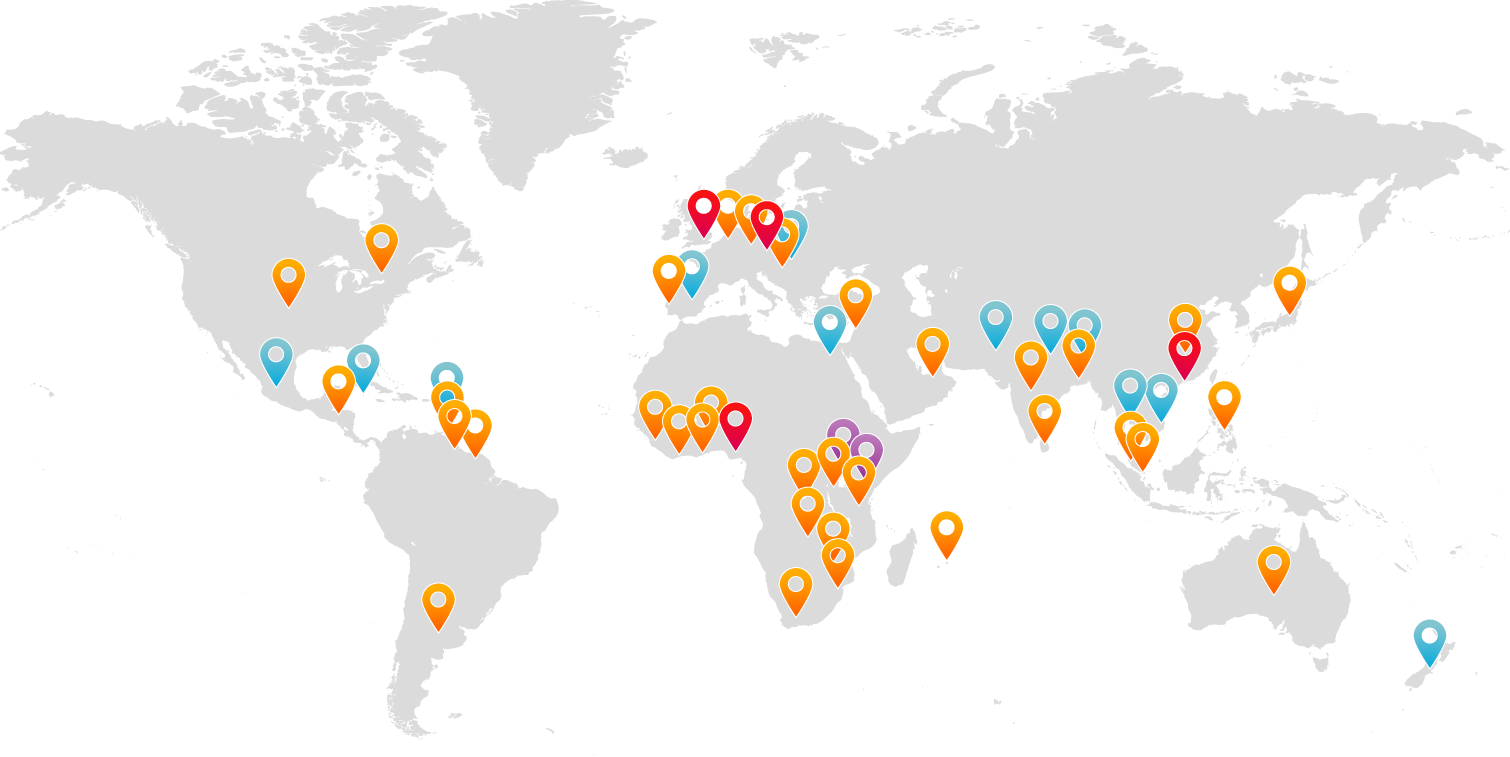
To understand how education and employment systems are adapting, Skills Builder Global brought together international education leaders from countries including India, Kenya, Lebanon, the UAE, and the UK for a global roundtable.
While technical skills risk becoming redundant or automated before a student even graduates, several pioneering systems are leveraging the Skills Builder Universal Framework to adapt:
- Colombia: To address tech-market growth alongside rural digital divides, Colombia has connected its National AI Policy directly to mandatory socio-emotional learning. The state higher education entrance exam now evaluates emotional competencies, empathy, and social skills, while social enterprises use low-resource, AI-powered tools to deliver framework-aligned skill development.
- Czechia: Overcoming a historical focus on technical specialisation and memorisation, Czechia launched the national AIDIG project to grant public school teachers access to professional AI tools. Social enterprises like Skills Builder Global Lead Partner Schola Empirica localised the Universal Framework, using AI to design classroom activities mapped to the framework's steps and freeing up teacher time for mentorship.
- Hong Kong SAR (China): Navigating rapid AI integration, the government provided direct grants to schools to deploy advanced digital tools. Partnering with Skills Builder Lead Partner Ednovators, schools map these tools to the Universal Framework to build cross-disciplinary talent pools where arts students master logic and engineering students anchor themselves in human values.
- Japan: Facing an acute deficit of 11 million workers by 2040, Japan has reframed AI as a vital enabler rather than a competitor. Under its GIGA School Project, every student receives a personal device, while partnerships with organizations like Asknet localise the framework to enhance social creativity and human-to-human collaboration.
- Nigeria: Capitalising on the energy of a highly adaptable youth population that frequently uses mobile AI tools to teach themselves, the state initiated the Digital Nigeria 2026 agenda. Through partners like Concinnity, the government is actively working to embed the structured steps of the Universal Framework directly into its revised national curriculum.
- United Kingdom: To bridge the productivity and social mobility gap, the Universal Framework has achieved widespread systemic adoption across England. Backed by collective impact partners, the framework is recommended in statutory guidance for careers education and was used to develop England’s Standard Skills Classification.
Rewriting the playbook for education and business
To prevent a deepening of the "Skills Trap", where socio-economically disadvantaged individuals are excluded from the AI wage premium, systemic change is required across both classrooms and corporate boards.

For educators:
- Curriculum integration: Treat essential skills with the same academic rigour as mathematics or science, breaking them down into practical, measurable steps from early childhood through higher education.
- Socratic AI integration: Use classroom technology not to bypass thinking, but as a "socratic mentor" that asks probing questions and stretches students' independent critical thinking capacities.
- Teacher enablement: Leverage AI to handle heavy administrative workloads, freeing teachers to redirect their energy toward direct student relationship management and foundational character development.
For businesses:
- Signal what matters: Transition to skills-led hiring models. Define and assess the essential transferable skills needed for every role rather than relying on outdated degree proxies, much like how organisations use steps from the Universal Framework to structure recruitment and internal upskilling.
- Commit to lifelong learning: Review learning and development budgets. Instead of focusing exclusively on short-lived technical skills, treat essential skills as a career-long requirement to actively reduce worker anxiety during digital transitions.
- Collaborate with communities: Move beyond siloed corporate social responsibility initiatives to form deep partnerships with schools and NGOs. Programmes like KPMG’s WorkReady workshops empower young people by introducing them to technology while building core transferable skills.
Join the global movement
The technological landscape is moving at breakneck speed, but our most valuable assets remain our most human ones. By collaborating across governments, schools, businesses, and civil society, we can build a future where every young person has the agency, creativity, and resilience to thrive.
The skills trap cannot be solved in isolation. Whether you are an educator preparing the next generation or an employer preparing your team, let’s build these essential skills together.
Ready to make a difference? Discover how to implement the open-source Universal Framework in your organisation or institution at skillsbuilder.org.
Download the full report here.