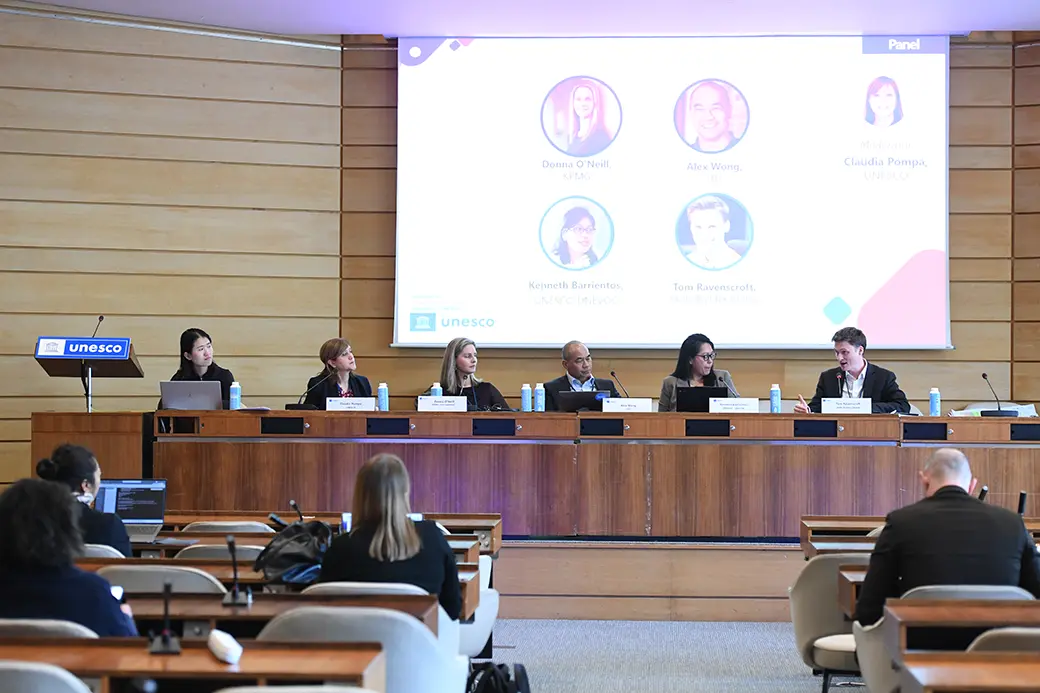

The good people of Unesco and KPMG International kindly invited me to Paris this week to speak to the question of how we prepare educators and learners for technological transformation as part of their Global Education Coalition.
It’s a pressing question, but there is a paradox: just teaching technical or AI skills is completely the wrong approach.
As I shared, we know three things:
- Firstly, that essential transferable skills are critical enablers of using technological tools: our Essential Skills Tracker 2025 showed that individuals with higher essential skills levels were better able to use AI tools, and felt more confident trying. This is unsurprising since the ability to structure problems, identify bias, plan and adapt are vital.
- Secondly, in a world where technology and AI is disrupting so much of the labour market, essential skills are the human advantage. To communicate responsively, create, work with others and lead are the very skills which end up being highly rewarded in the job market and support life and job satisfaction.
- Thirdly, everyone has the capability to hone and improve their essential skills through careful, deliberate teaching.
This is all very well but the impact comes from the detail of how we build essential skills in the classroom. From our work in schools in the UK, Czechia, Hong Kong (China), Uganda and 20 other countries we know there are six critical enablers:
- Align: We start with a shared language and commitment to essential skills at an institutional level, and the Skills Builder Universal Framework is the best model here
- Plan: We need a plan for progression - not just activity but thinking through how learners make progress and what we expect at every age or stage
- Measure: We should measure essential skills with rigour - to teach better, to see progress, and to identify individual needs
- Teach: We teach directly because this is often the most efficient way to support learning - whether how to mindmap, logical reasoning, or demonstrating active listening
- Practise: We see that learners to need to practise their essential skills in different curriculum areas to enhance essential skills and curriculum learning together
- Apply: We support learners to make their skills transferable when they can apply them to real life projects and challenges
The thrill and frustration of this work is that we increasingly have the evidence base for why essential skills matter and we know what works to build them. Let’s use this moment of technological transformation to double down on the practical changes that will build them for every learner.