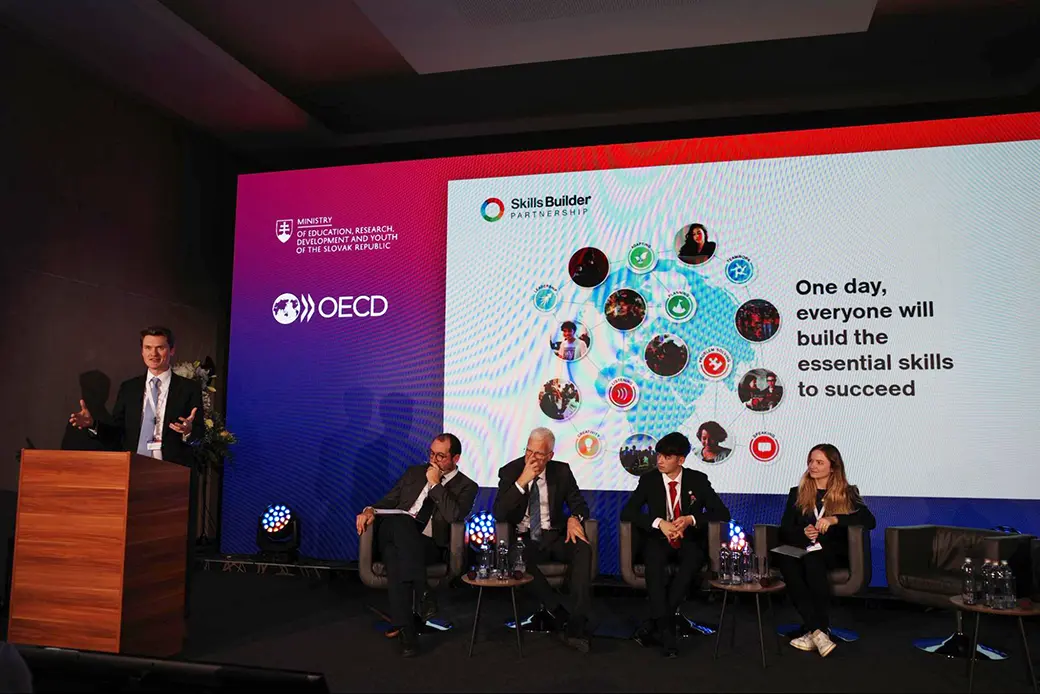

It was a huge privilege to represent and share our global partnership at one of the world’s leading education events - the OECD World Forum, hosted this year in Bratislava, Slovakia.
The three day event brought together more than 100 senior policy makers, educators, NGOs and students from across the OECD countries. It was an opportunity to learn about the latest developments and insights from OECD research, including PISA and TALIS - the world’s biggest teacher survey. We also had the opportunity to learn from Slovakia’s educational reforms, with visits out to primary, secondary and college settings.
OECD Learning Compass
One of the key focuses of the OECD at the moment is their new Education 2040 initiative which includes reviewing the Learning Compass as a common model for framing a complete education. The OECD Learning Compass 2030 defines Competency as the ability to meet complex demands by mobilising knowledge, skills, attitudes, and values. Within this, Skills are specifically defined as the ability and capacity to carry out processes and use knowledge responsibly.
The Compass distinguishes between:
- Cognitive and Meta-cognitive Skills: Focus on thinking, reasoning, and self-regulation of the learning process
- Social and Emotional Skills: Focus on interacting and managing oneself
Both of these obviously chime closely with the Skills Builder Universal Framework, with our focus on creative problem solving, communication, collaboration and self-management - it’s a model that we fully endorse.
Bringing the Learning Compass to life
The Learning Compass reflects the fact that education systems across the world are currently grappling with a shared challenge. There is near-universal agreement that learners need more than just academic grades to thrive; they need essential skills like teamwork, leadership, and problem-solving.
However, the difficulty lies how to really realise that ambition - and how to bridge the gap from policy and research reports to change what actually happens in a classroom to really support individuals to boost their essential skills.
This was why I was thrilled to have the opportunity to give a speech to introduce the work of Skills Builder Partnership and the Universal Framework as part of the event.
I framed up our challenge: How do we turn the high-level aspiration to build essential skills into practical, systemic change within the classroom? How do we move from abstract concepts to measurable progress?
The Universal Framework: A route map for change
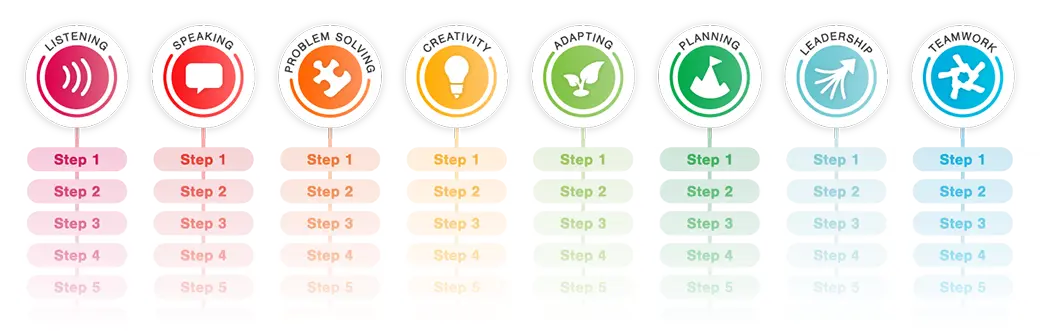
This is exactly where the Skills Builder Universal Framework proves its value. During the forum, we highlighted how the Universal Framework serves as a practical tool for educators and policymakers.
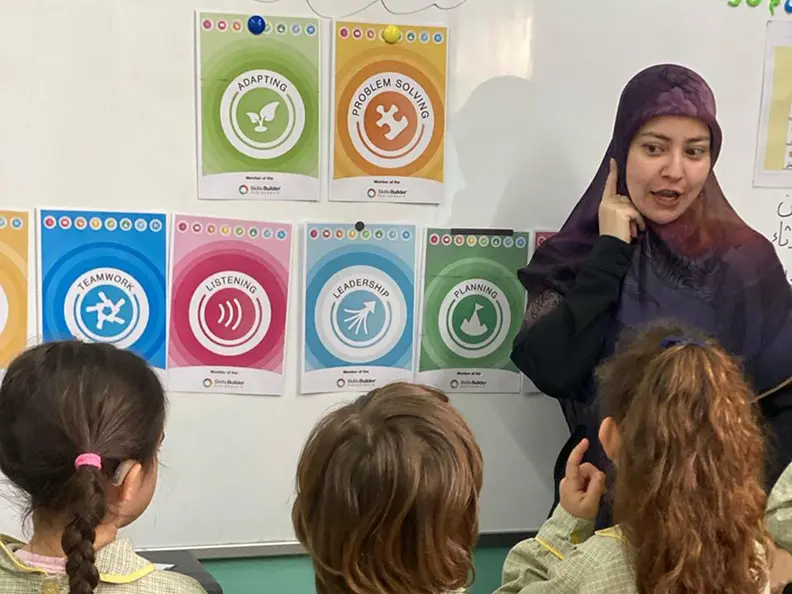
Rather than treating essential skills as vague traits, the Universal Framework breaks them down into teachable, measurable steps. Furthermore, the Skills Builder approach provides the necessary structure to turn aspirations into practice.
The proof of this approach lies in its global adoption. We are thrilled to report that the Framework has already shown its worth in more than 40 countries, with educators and organisations. This global reach is not a top-down imposition; rather, it is led and adapted by brilliant local Skills Builder partners who ensure the language and application resonate with their specific cultural and educational contexts.
If we want to realise the brilliant ambition of a complete education set out in the OECD Learning Compass, we need to also grapple with the details which make it work in the classroom:
- Clarity on definitions and learning objectives
- Reliable tools for assessment of learners’ essential skills
- Age and stage-related expectations
- Teachers who feel trained and confident
- Curriculum space and resources to get educators started
We are excited to be working with our Lead Partners across the world on exactly these challenges.
Looking ahead
Our presence at the OECD Global Education Forum is just one step in a larger journey. We are more energised than ever to share this work and continue supporting policy change that delivers real impact.
By equipping systems with a common language for skills, we can ensure that every learner, regardless of where they are in the world, has the opportunity to build the essential skills to succeed.